

Peptides for weight loss are short chains of amino acids studied for how they influence key metabolic pathways involved in appetite regulation, blood sugar control, and fat metabolism. In research and clinical science, these compounds have gained attention because they act as signalling molecules, helping scientists better understand how the body controls hunger, energy balance, and fat storage.
In a weight-management research context, peptides are not viewed as standalone solutions. Instead, they are investigated for how they interact with existing lifestyle factors, such as diet and physical activity, to support changes in body composition. Many of the most widely studied peptides mimic or amplify naturally occurring hormones that regulate satiety, insulin release, and lipid oxidation, making them valuable tools in metabolic and obesity research. peptides for weight loss
Recent advances—particularly around GLP-1–based peptides and related metabolic compounds—have reshaped how researchers study weight loss mechanisms. Large clinical trials have demonstrated meaningful body-weight reductions with certain peptide-based therapies, while laboratory research continues to explore their underlying biological effects, receptor interactions, and long-term metabolic implications.
For UK-based laboratories and research professionals, it is important to distinguish between licensed medical treatments and research-only peptide materials. In the UK, peptides may be sourced legally when they are supplied strictly for Research & Development (R&D) purposes and clearly labelled as not for human consumption. peptides for weight loss
Suppliers such as LabGradePeptides.uk support this research landscape by providing high-purity, research-grade peptides intended exclusively for laboratory, in-vitro, and educational studies. This allows researchers to investigate weight-loss mechanisms responsibly while remaining aligned with UK regulatory and ethical standards.
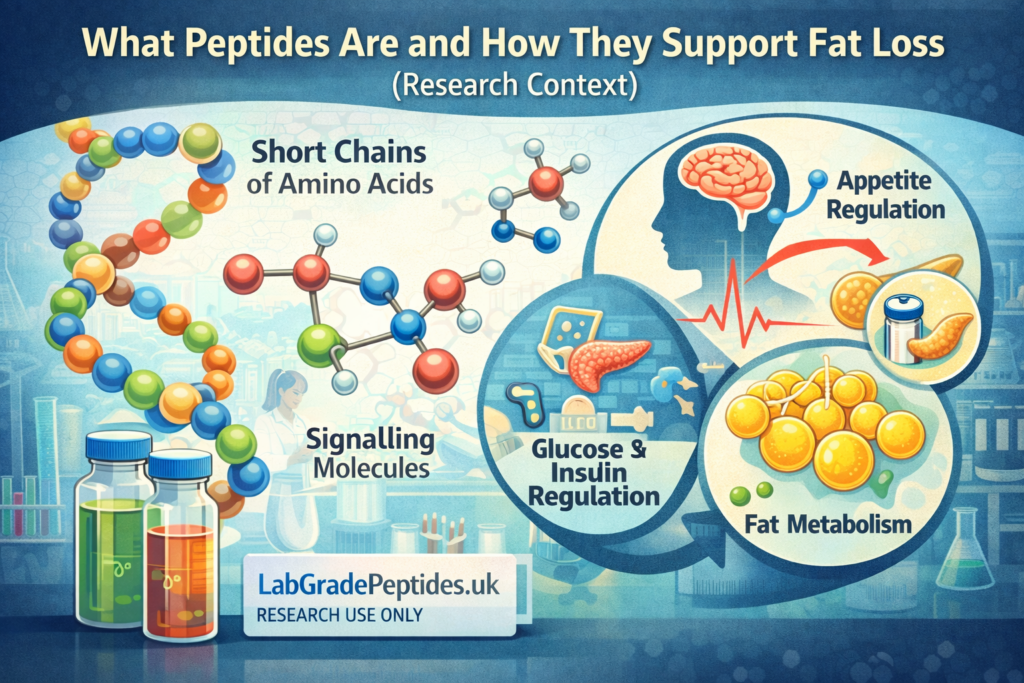
Peptides are small fragments of proteins that act as signalling molecules, allowing cells and organs to communicate and coordinate complex biological processes. In metabolic and weight-loss research, peptides are studied for how they influence hormonal regulation, appetite control, glucose metabolism, and fat oxidation, rather than acting as direct fat-burning agents. peptides for weight loss
Unlike full protein hormones, peptides often function by:
This makes them especially useful for studying why people eat, how the body stores energy, and how fat metabolism is regulated at a cellular and systemic level. peptides for weight loss
Weight-loss-oriented peptide research typically focuses on several core mechanisms:
Understanding these pathways allows researchers to:
For laboratory professionals designing such studies, sourcing peptides from a research-only supplier like LabGradePeptides.uk ensures access to consistent, high-purity materials suitable for metabolic research—without crossing into clinical or consumer use. peptides for weight loss
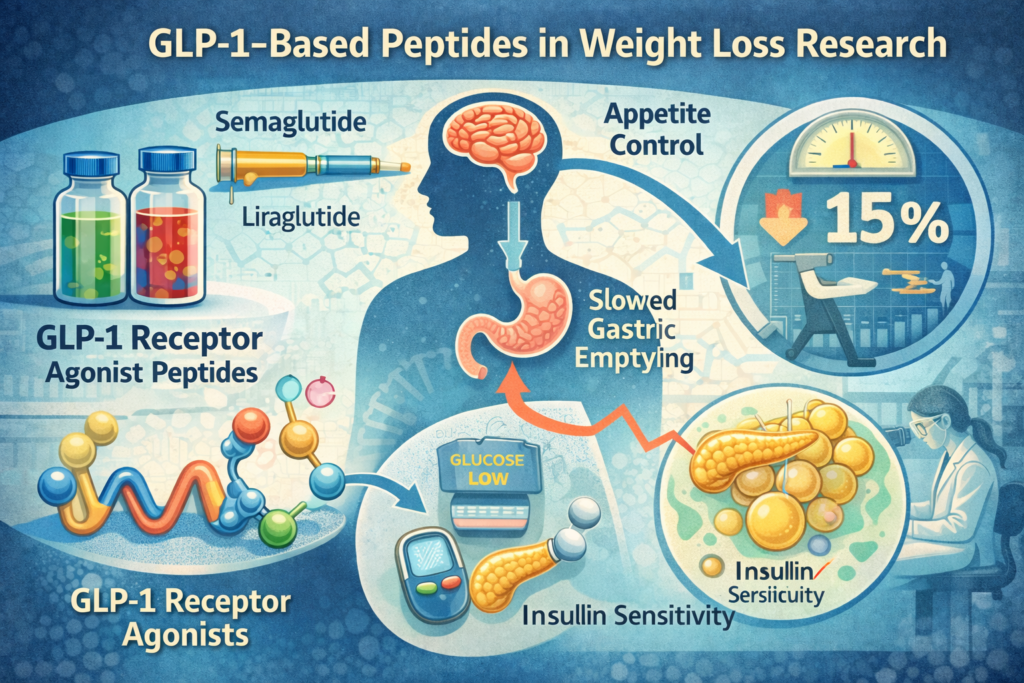
Among the most extensively studied peptides in weight-management science are GLP-1 receptor agonists and related dual-agonist compounds. In research settings, these peptides are investigated for how they replicate or enhance gut-derived hormone signalling that regulates appetite, glucose metabolism, and energy balance. peptides for weight loss
In laboratory and translational research, GLP-1–based peptides are examined for their ability to:
These mechanisms make GLP-1 peptides a central focus for obesity, diabetes, and metabolic-syndrome research. peptides for weight loss
Large clinical trials have demonstrated substantial weight-loss outcomes when GLP-1–based therapies are combined with dietary and lifestyle interventions, often exceeding results from older pharmacological approaches. For researchers, these findings provide:
While some GLP-1 peptides are licensed prescription medicines, their molecular sequences and analogues are also widely studied in non-clinical research. It is essential to distinguish:
For UK laboratories conducting such work, sourcing peptides strictly for research—such as from LabGradePeptides.uk—helps maintain compliance, reproducibility, and ethical boundaries.
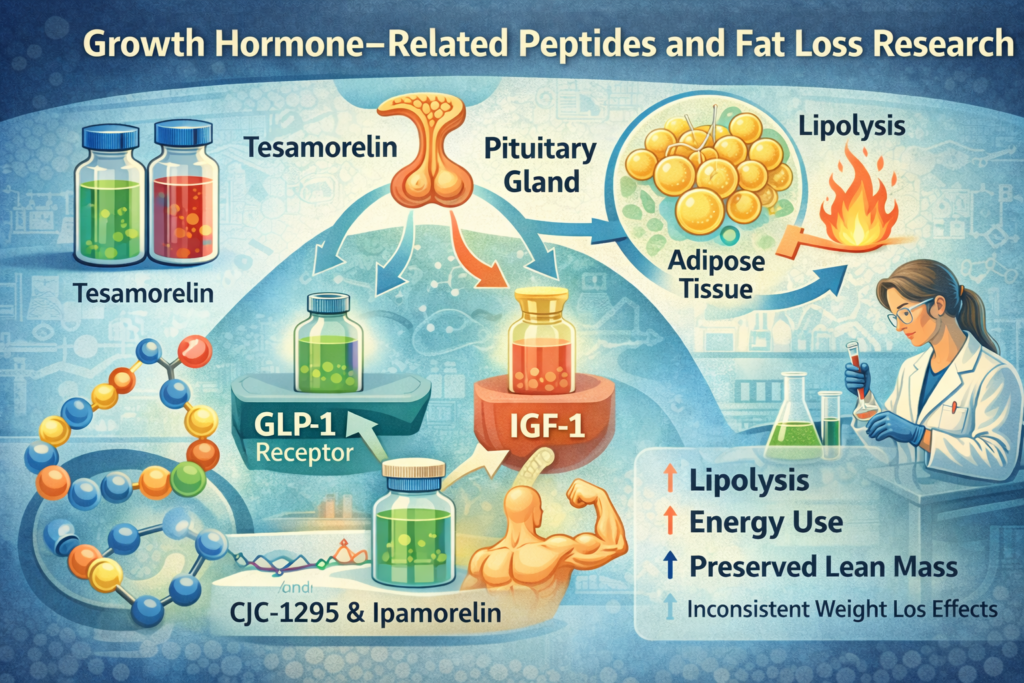
Another class of compounds frequently explored in weight-management research are growth hormone–releasing peptides (GHRPs) and growth hormone–releasing hormone (GHRH) analogues. Rather than acting directly on appetite, these peptides are studied for how they modulate the growth hormone (GH)–IGF-1 axis, which can influence fat metabolism and lean mass preservation in experimental settings. peptides for weight loss
In laboratory and translational research, GH-related peptides are explored for their effects on:
Human and preclinical data consistently show that GH-related peptides:
However, compared with GLP-1–based peptides, direct fat-loss outcomes are less robust and more variable, often confounded by diet, training status, age, and baseline hormone levels. As a result, these peptides are best framed as research tools for studying endocrine regulation, not primary weight-loss agents. peptides for weight loss
For researchers, GH-modulating peptides are useful for:
UK laboratories sourcing these compounds strictly for non-clinical work often rely on specialist suppliers such as LabGradePeptides.uk, which provides GH-related peptide sequences exclusively for Research & Development use, helping ensure regulatory compliance and experimental consistency. peptides for weight loss
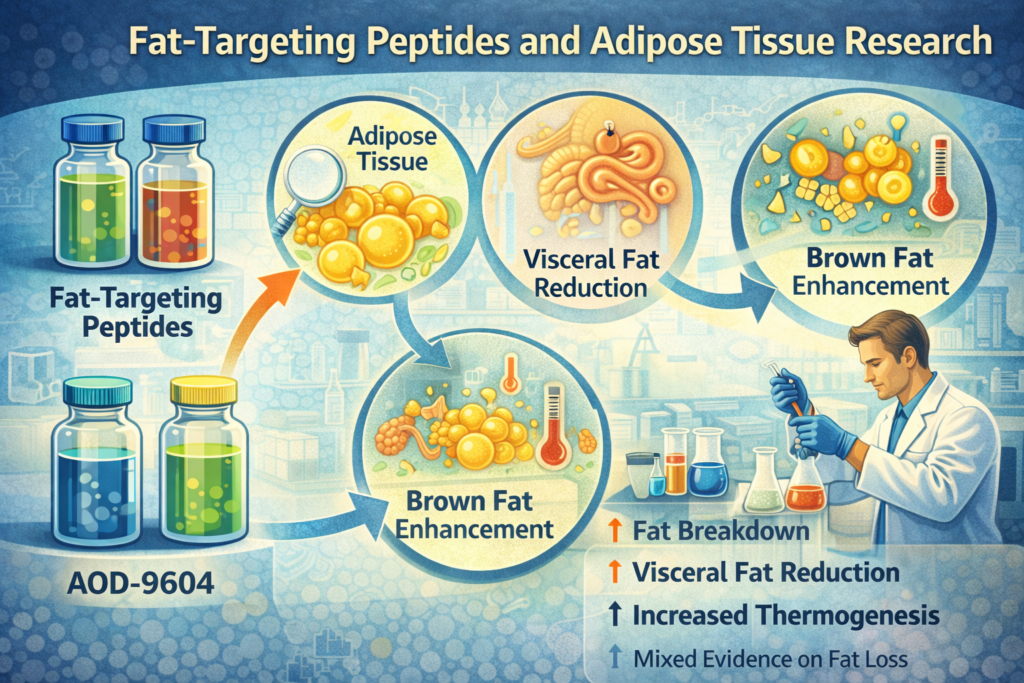
Beyond appetite-based and hormone-modulating compounds, some peptides are researched specifically for their direct effects on adipose (fat) tissue metabolism. These peptides are of interest because they allow scientists to study fat breakdown, distribution, and metabolic risk without primarily acting on hunger signals.
Key examples commonly explored in research include:
In laboratory and translational studies, fat-targeting peptides are examined for their ability to:
Unlike GLP-1 peptides, these compounds are generally not appetite suppressants, making them useful for isolating fat-specific metabolic pathways in controlled experiments.
Fat-targeting peptides enable researchers to:
For laboratories running comparative protocols, sourcing multiple peptides from a single specialist supplier such as LabGradePeptides.uk helps standardise peptide origin, purity, and documentation—supporting reproducibility across adipose tissue research studies.
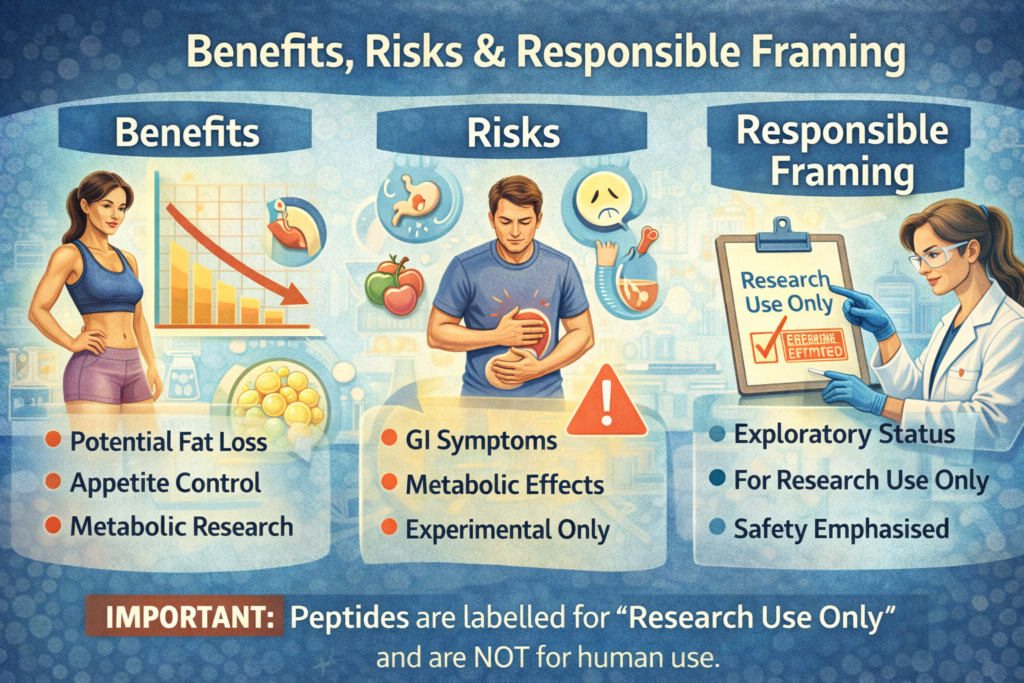
When writing about peptides for weight loss, it’s important to balance scientific potential with clear limitations. Framing the topic responsibly helps readers understand what the evidence supports—while avoiding medical or consumer-use claims that would be misleading or non-compliant in the UK. peptides for weight loss
Current evidence suggests several potential advantages, depending on the peptide class and study design:
From a research perspective, these benefits make peptides valuable tools for studying appetite biology, insulin sensitivity, and fat metabolism. peptides for weight loss
Equally important are the cautions highlighted in the literature:
These limitations reinforce why many peptides should be framed as experimental or adjunctive research tools, not guaranteed weight-loss solutions.
To stay compliant and credible:
For a UK audience, this also means clarifying that suppliers such as LabGradePeptides.uk provide peptides strictly for laboratory and in-vitro research, not for self-administration or medical treatment. peptides for weight loss

For a UK audience, it is essential to clearly explain the legal distinction between medicines and research peptides, especially when discussing compounds associated with weight loss.
In the UK, peptides are not automatically illegal. Many peptide compounds can be legally bought and sold when they are supplied strictly for Research & Development (R&D) purposes. This includes:
Legality depends on how the peptide is marketed, labelled, and intended to be used, not simply on the molecule itself. peptides for weight loss
UK medicines law and MHRA guidance make it illegal to:
Peptides promoted for weight loss or self-administration would be treated as unlicensed medicines, which is prohibited. peptides for weight loss
The Medicines and Healthcare products Regulatory Agency (MHRA) regulates substances sold as medicines in the UK. Peptides remain outside this scope only when positioned as research chemicals. Compliance therefore requires:
This framework allows legitimate research to continue while protecting public safety. peptides for weight loss
Sourcing peptides from UK-based research suppliers offers:
Suppliers such as LabGradePeptides.uk operate within this framework by supplying research-grade peptides exclusively for non-human, laboratory use, helping UK researchers remain compliant while conducting metabolic and weight-loss research.
Peptides have become a central focus in weight loss and metabolic research, offering scientists powerful tools to study how appetite regulation, insulin sensitivity, and fat metabolism interact at a biological level. From GLP-1–based peptides with strong clinical validation to growth hormone–related and fat-targeting peptides used in experimental models, the evidence highlights multiple pathways through which body weight and composition can be influenced. peptides for weight loss
At the same time, it is essential to maintain a clear boundary between research and treatment. Many peptides discussed in weight-loss contexts are either prescription-only medicines or remain experimental compounds, and their use outside regulated clinical settings is not permitted. For this reason, responsible communication must focus on mechanisms, evidence, and research design, rather than personal outcomes or usage guidance.
For UK laboratories, universities, and qualified professionals, progress in this field depends on ethical practice, regulatory awareness, and compliant sourcing. Purchasing peptides strictly for Research & Development (R&D) purposes, ensuring proper labelling, and avoiding consumer-facing claims protects both scientific credibility and legal standing.
By supplying research-grade peptides exclusively for non-human laboratory use, LabGradePeptides.uk supports responsible metabolic and weight-loss research in the UK. Used appropriately, peptides will continue to help researchers deepen understanding of obesity, appetite control, and fat metabolism—advancing science while remaining firmly within ethical and regulatory boundaries. peptides for weight loss
Peptides for weight loss are short chains of amino acids studied for how they influence appetite regulation, blood sugar control, insulin sensitivity, and fat metabolism in laboratory and clinical research settings.
In research, weight-loss-related peptides act as signalling molecules, helping scientists study pathways linked to hunger, satiety, glucose handling, and fat oxidation rather than directly “burning fat.” peptides for weight loss
The most researched peptides include GLP-1 receptor agonists (such as semaglutide and liraglutide), dual GIP/GLP-1 agonists like tirzepatide, as well as growth-hormone-related and fat-targeting peptides studied experimentally.
Clinical research shows GLP-1-based peptides can lead to significant weight reduction when combined with diet and lifestyle changes. In research settings, they are also used to study appetite control and metabolic adaptation. peptides for weight loss
Growth hormone–related peptides are studied for their role in lipolysis and lean mass preservation, but current evidence suggests their fat-loss effects are less consistent than those seen with GLP-1-based peptides.
Fat-targeting peptides are compounds researched for their direct effects on adipose tissue metabolism, such as stimulating fat breakdown or reducing visceral fat, rather than suppressing appetite. peptides for weight loss
Yes, peptides are legal to buy and sell in the UK when supplied strictly for research purposes only and clearly labelled as not for human consumption. Selling them as weight-loss treatments is not permitted.
“For Research Use Only” (RUO) means the peptide is intended solely for laboratory, in-vitro, ex-vivo, or preclinical research and is not approved for human or veterinary use. peptides for weight loss
In clinical contexts, some peptides have been associated with side effects such as gastrointestinal symptoms or metabolic disturbances. In research discussions, it’s important to emphasise experimental status and safety limitations.
UK researchers can source research-grade peptides from suppliers such as LabGradePeptides.uk, which focuses exclusively on R&D-only peptides with clear labelling and UK-based delivery. peptides for weight loss