
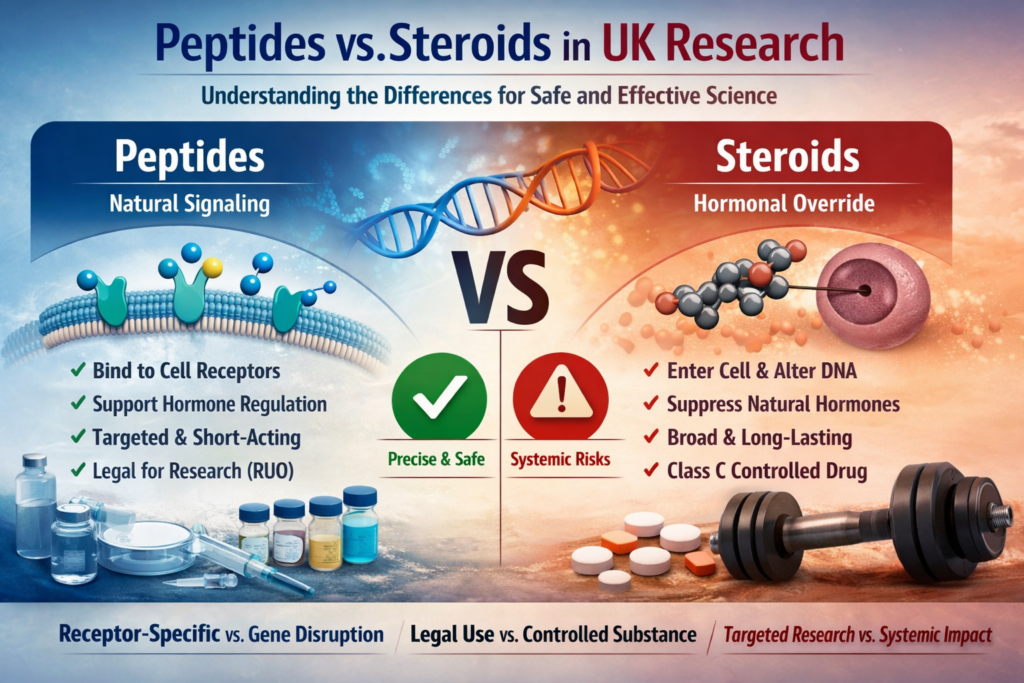
In scientific discussions—and especially in online research communities—peptides and anabolic steroids are frequently grouped together. The confusion is understandable: both classes of compounds appear in studies related to muscle growth, recovery, metabolism, and performance. However, this surface-level overlap masks fundamental differences in chemistry, biological action, safety, and legal classification.
For UK researchers, this distinction is not merely semantic. Misunderstanding the difference between peptides and steroids can lead to poor experimental design, regulatory non-compliance, and misinterpretation of results. As peptide research expands rapidly across metabolic science, regenerative biology, and longevity studies, clarity has become essential. are peptides steroids
One reason for the confusion is historical. Anabolic steroids have long been associated with muscle hypertrophy and performance enhancement, making them widely recognized—albeit controversial—research compounds. Peptides, by contrast, are newer to mainstream awareness, despite being deeply embedded in human biology. When peptides demonstrate effects such as improved recovery, altered body composition, or enhanced signaling efficiency, they are often incorrectly assumed to be “a safer form of steroids.”
This assumption is scientifically inaccurate. are peptides steroids
Peptides and steroids differ at every meaningful level:
The purpose of this article is to clearly separate fact from misconception. By examining how peptides and steroids function at a molecular and biological level, UK researchers can better understand why peptides are not steroids—and why they are increasingly preferred in legitimate, compliant research settings. are peptides steroids
The sections that follow provide a structured, evidence-based breakdown of these differences, beginning with a direct answer to the central question: are peptides steroids?
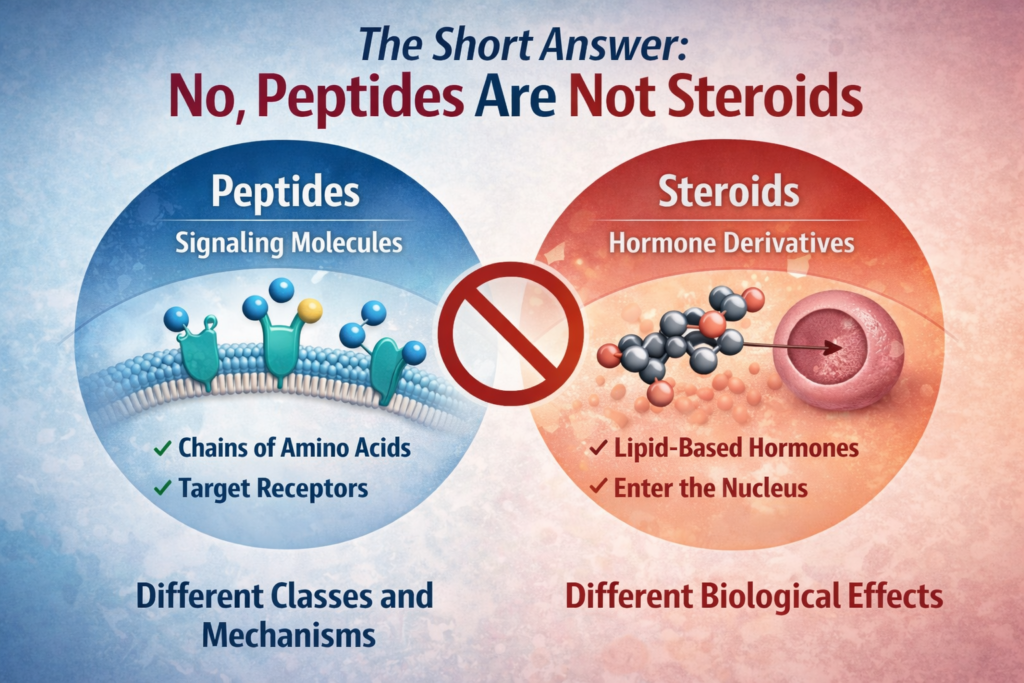
The simplest and most accurate answer is no—peptides are not steroids. Although both may appear in research related to muscle biology, metabolism, or recovery, they belong to entirely different classes of molecules and operate through fundamentally different biological mechanisms.
Peptides are chains of amino acids, the same basic building blocks that make up proteins in the human body. Their primary role in biological systems is communication. Peptides act as signaling molecules, binding to specific receptors on the surface of cells to trigger tightly regulated biological responses. In research settings, peptides are used to study how natural pathways such as hormone release, tissue repair, inflammation control, or metabolic regulation can be modulated with precision.
Anabolic steroids, on the other hand, are synthetic derivatives of testosterone. Chemically, they are lipid-based compounds built around a rigid four-ring steroid structure derived from cholesterol. Their function is not to signal but to replace or overwhelm natural hormones. Steroids cross cell membranes and bind directly to intracellular androgen receptors, forcing changes in gene expression that drive muscle growth and other androgenic effects. are peptides steroids
This difference leads to a critical distinction in how the body responds:
Because peptides work through existing receptor pathways, the body’s natural feedback systems generally remain intact. Steroids disrupt these systems by introducing high levels of external hormones, often suppressing the body’s own hormone production as a result.
From a research perspective, this means peptides and steroids are not interchangeable tools. They answer different scientific questions, carry different risks, and fall under very different regulatory frameworks in the UK. Confusing one for the other can lead to incorrect assumptions about safety, legality, and experimental relevance. are peptides steroids
With this clear distinction established, the next section explores why peptides and steroids differ so profoundly at the molecular level, beginning with their chemical structures.
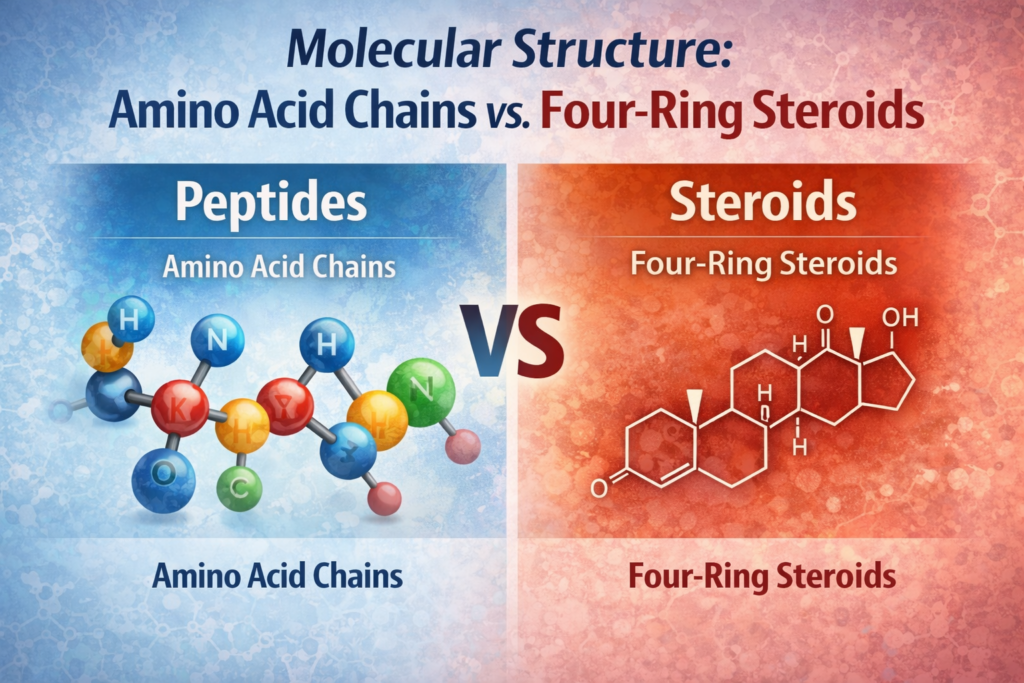
The most fundamental difference between peptides and anabolic steroids lies in their chemical structure. This structural distinction determines how each compound behaves in the body, how it is processed, and how it interacts with cells.
Peptides are composed of amino acids linked together by peptide bonds, forming short chains that typically range from two to fifty amino acids in length. These amino acids are the same biological building blocks used to create proteins throughout the body. are peptides steroids
Each peptide’s specific amino-acid sequence dictates its three-dimensional shape. This shape determines which receptor the peptide can bind to and, therefore, which biological pathway it influences. Because of this, peptides are highly target-specific—a small change in sequence can dramatically alter function.
From a chemical standpoint, peptides are:
Because peptides are water-soluble, they cannot pass directly through the lipid-rich cell membrane. Instead, they interact with receptors on the surface of cells, triggering internal signaling cascades. This constraint is a key reason peptides tend to act in a controlled and physiologically aligned manner. are peptides steroids
Anabolic steroids are chemically unrelated to peptides. They are lipid-based molecules derived from cholesterol, built around a rigid structure of four fused carbon rings. This structure is common to all steroid hormones, including testosterone, estrogen, and cortisol.
This ring-based architecture makes steroids:
Once inside the cell, steroids bind directly to intracellular androgen receptors. The steroid-receptor complex then travels to the cell nucleus, where it alters gene transcription. This direct access to genetic machinery is what gives steroids their powerful—and often disruptive—effects. are peptides steroids
Chemical modifications to the steroid structure, such as alkylation or esterification, are often used to extend their half-life or alter how they are absorbed. However, these modifications are also responsible for many of the well-documented toxic effects associated with steroid use.
These structural differences explain why peptides and steroids behave so differently:
In other words, peptides and steroids are not just different tools with similar outcomes—they are chemically and biologically unrelated compounds. are peptides steroids
With the structural distinction clearly defined, the next section examines how these differences translate into action, comparing natural signaling pathways with hormonal override mechanisms.
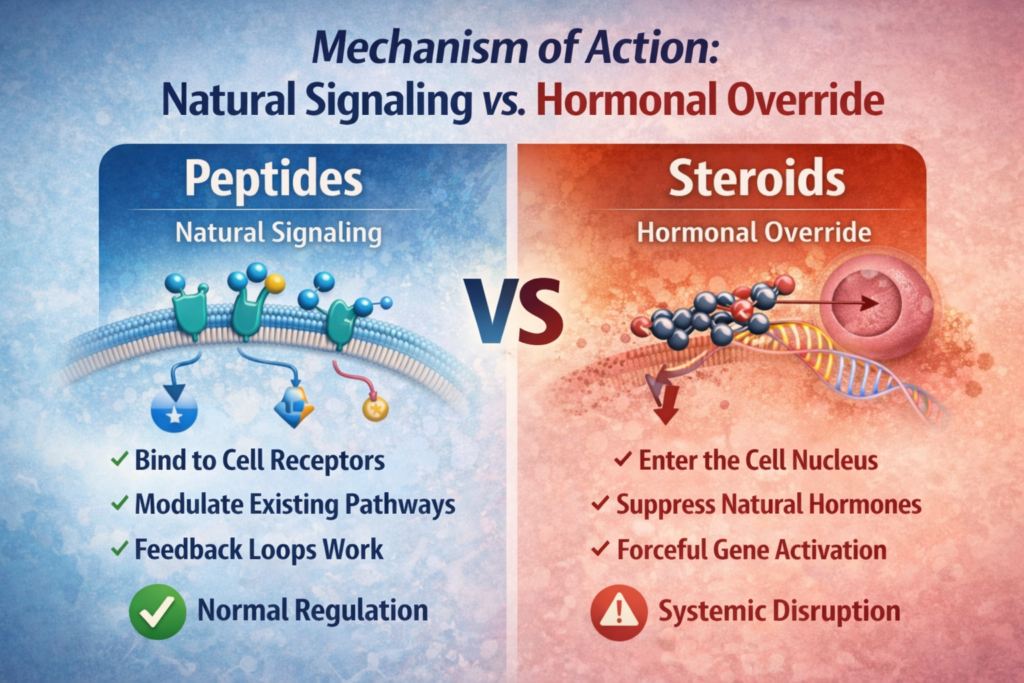
The structural differences between peptides and anabolic steroids directly determine how they act inside biological systems. This difference in mechanism is one of the main reasons peptides are increasingly favored in legitimate research settings, while steroids are treated with caution due to their disruptive effects. are peptides steroids
Peptides function as biological messengers. Rather than entering the cell, they bind to specific receptors on the cell surface, most commonly G-protein–coupled receptors (GPCRs) or receptor tyrosine kinases. Once a peptide binds to its matching receptor, it triggers an intracellular signaling cascade through secondary messengers such as cyclic AMP (cAMP), calcium ions, or phosphorylation pathways. are peptides steroids
This process allows peptides to:
Crucially, peptides do not replace hormones. Instead, they signal the body to produce or regulate its own hormones and biological responses. This means the body’s natural feedback loops—such as those controlling growth hormone or metabolic hormones—remain functional.
As a result, peptide signaling tends to be:
For researchers, this makes peptides ideal tools for studying how biological systems respond to stimulation without forcibly overriding them. are peptides steroids
Anabolic steroids operate through a fundamentally different and far more intrusive mechanism. Because they are fat-soluble, steroids pass directly through cell membranes and bind to androgen receptors located inside the cell, either in the cytoplasm or nucleus.
Once bound, the steroid–receptor complex:
This process bypasses natural signaling pathways entirely. Instead of asking the body to respond, steroids impose a hormonal state from the outside. The body reacts to this flood of synthetic androgens by shutting down its own hormone production through negative feedback mechanisms. are peptides steroids
When steroids are present in high concentrations, the hypothalamic–pituitary–gonadal (HPG) axis detects excess androgen levels and responds by:
This suppression can persist long after steroid exposure ends, leading to prolonged hormonal imbalance and recovery issues. are peptides steroids
From a scientific standpoint, the difference is critical:
Because peptides work through surface receptors and intact feedback systems, they provide cleaner, more interpretable data. Steroids, by contrast, introduce systemic disruption that can confound results and complicate long-term studies.
With mechanism clearly defined, the next section examines how these differences translate into safety profiles and risk, comparing targeted peptide activity with the well-documented systemic dangers of anabolic steroids. are peptides steroids
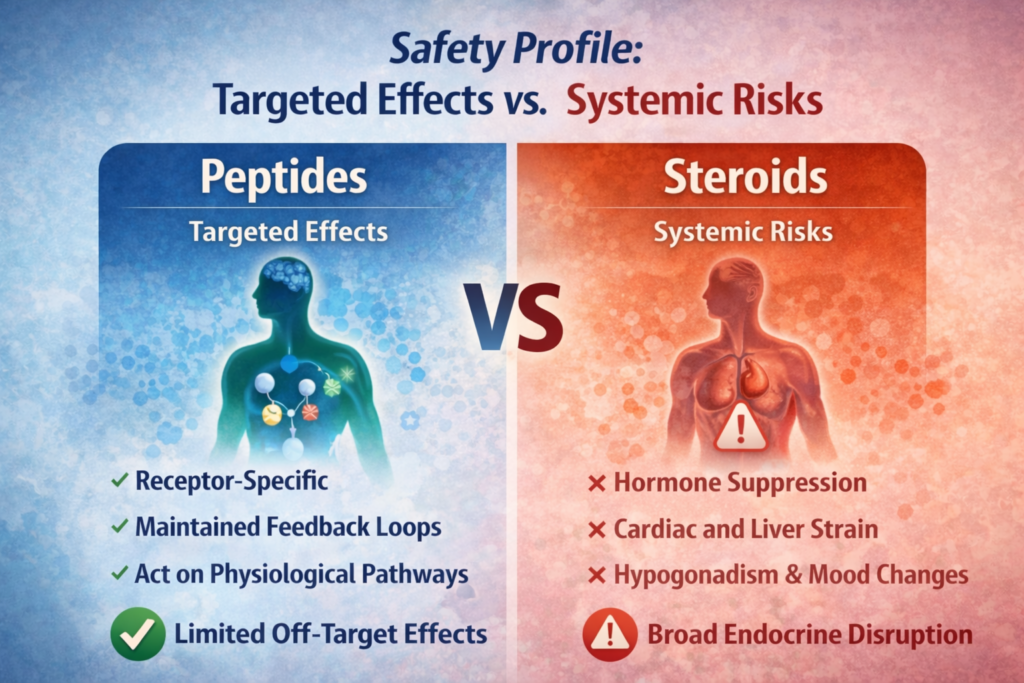
The differences in how peptides and anabolic steroids work are reflected most clearly in their safety profiles. For researchers, safety is not only a health concern but also a scientific one—compounds that introduce widespread disruption can compromise study validity and ethical standards.
Peptides are generally regarded in research settings as having a favourable safety profile, particularly when compared with compounds that directly manipulate hormone levels. Because peptides act through specific receptors and work within the body’s existing signaling systems, their effects tend to be localized and proportional. are peptides steroids
Key characteristics of peptide safety in research models include:
Reported adverse effects in controlled research contexts are typically mild and transient, such as temporary local reactions or short-lived physiological adjustments related to the targeted pathway under study. Importantly, peptides do not generally cause long-term suppression of natural hormonal axes. are peptides steroids
For researchers, this translates into:
Anabolic steroids, by contrast, carry extensive and well-established risks that affect multiple organ systems. These risks stem directly from their mechanism of action—flooding the body with synthetic hormones and overriding natural endocrine regulation.
Commonly documented steroid-related risks include:
Endocrine System
Cardiovascular System
Liver Function
Psychological and Neurological Effects
These systemic effects introduce significant variability into research models and raise ethical concerns, especially in long-term or repeated studies. are peptides steroids
From a research perspective, safety is inseparable from data quality. Compounds that disrupt multiple systems simultaneously make it difficult to isolate cause-and-effect relationships. This is one of the primary reasons anabolic steroids are increasingly viewed as poor tools for modern biological research, outside of narrow and highly controlled contexts.
Peptides, by contrast, allow researchers to:
With safety considerations established, the next section turns to an equally important distinction: how peptides and steroids are treated under UK law, and why legal classification matters for researchers and institutions alike. are peptides steroids
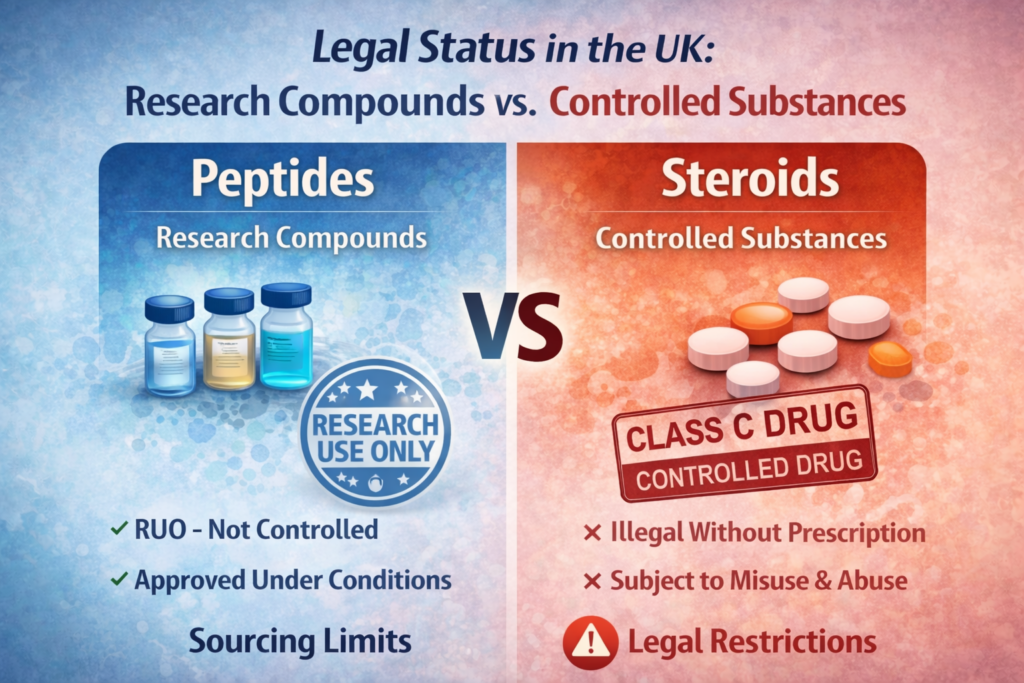
Beyond biology and safety, one of the most important distinctions between peptides and anabolic steroids for UK researchers is legal classification. The two compound types are treated very differently under UK law, and misunderstanding this difference can expose researchers and institutions to unnecessary regulatory risk.
In the UK, peptides are not classified as controlled drugs. Their legal status depends almost entirely on intended use and marketing, rather than on the molecules themselves. are peptides steroids
Peptides are legal to:
when supplied strictly for research and development (R&D) purposes.
This is why compliant suppliers label peptides as “For Research Use Only (RUO)”. Under this designation, peptides are intended exclusively for:
They are not approved medicines, supplements, or cosmetic ingredients, and they must not be marketed with dosing instructions or therapeutic claims without authorisation from the MHRA (Medicines and Healthcare products Regulatory Agency). are peptides steroids
For UK researchers, this framework allows legitimate scientific investigation to proceed without the legal barriers associated with controlled substances—provided that peptides are sourced responsibly and used within appropriate research contexts.
While peptides are legal for research use, compliance still matters. Ethical and regulatory expectations include:
Institutions and ethics boards increasingly scrutinise how research compounds are sourced and described. Suppliers that clearly maintain RUO positioning help protect researchers from compliance issues. are peptides steroids
It is also important to note that some peptides appear on World Anti-Doping Agency (WADA) prohibited lists for use in competitive sport. This classification affects athletes—not laboratory research—but it contributes to public confusion around peptide legality.
Anabolic steroids are treated far more strictly under UK law. They are classified as Class C controlled drugs under the Misuse of Drugs Act 1971. are peptides steroids
Key legal points include:
Importation and exportation of anabolic steroids without appropriate licensing is also illegal, even when intended for research purposes. These restrictions make steroids legally complex and risky materials for most laboratories. are peptides steroids
From a research perspective, the legal difference between peptides and steroids is decisive:
For most UK laboratories, peptides provide a far more practical and ethically defensible pathway for studying muscle biology, metabolism, regeneration, and signaling—without entanglement in controlled-substance regulations. are peptides steroids
With legal distinctions clarified, the next section explores why UK researchers are increasingly choosing peptides over steroids, not only for compliance reasons but also for scientific precision and research relevance.
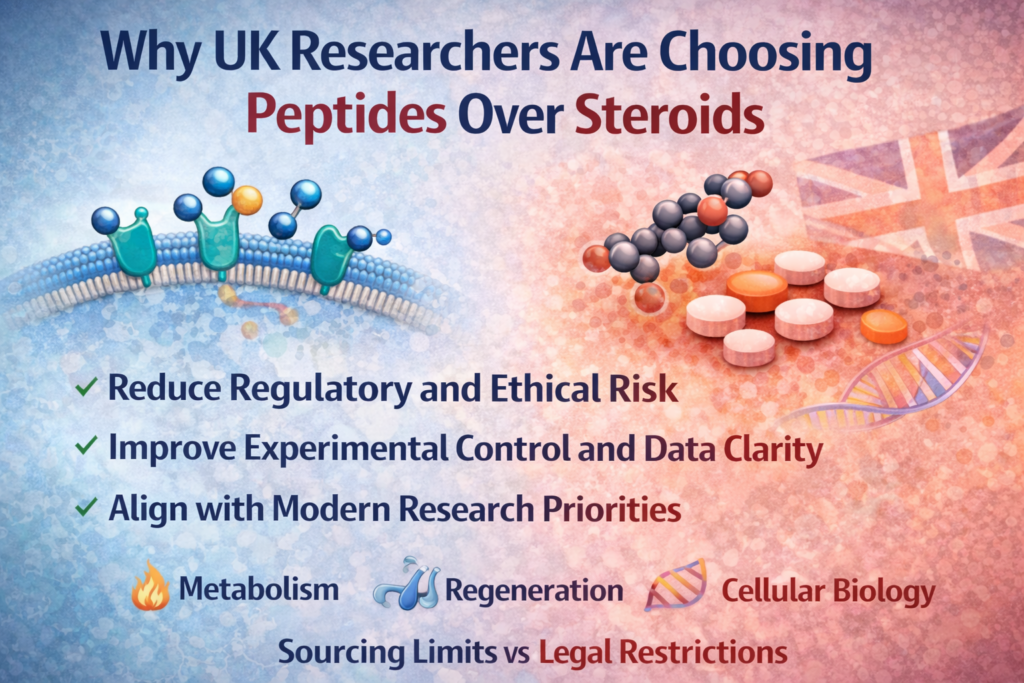
As biological research advances, UK laboratories are increasingly moving away from anabolic steroids and toward peptide-based models. This shift is not driven by trends or convenience, but by clear advantages in scientific precision, regulatory compliance, and experimental relevance. are peptides steroids
One of the strongest drivers behind peptide adoption is their research-only legal status in the UK. Because peptides are not controlled substances when supplied under RUO classification, they allow laboratories to conduct legitimate studies without navigating the licensing, storage, and reporting requirements associated with Class C drugs.
From an ethical standpoint, peptides also present fewer concerns in:
This regulatory clarity simplifies approvals from ethics committees and institutional review boards. are peptides steroids
Modern research increasingly focuses on pathway-specific questions rather than blunt outcome measures. Peptides excel in this area because they:
Steroids, by contrast, act broadly and indiscriminately, affecting multiple systems at once. This makes it difficult to isolate variables or attribute observed effects to a single mechanism. are peptides steroids
Because anabolic steroids disrupt endocrine balance, lipid metabolism, cardiovascular function, and psychological state simultaneously, they introduce numerous confounding factors into research models. These disruptions can:
Peptides, with their shorter half-lives and receptor specificity, help maintain stable experimental conditions, improving data reliability and reproducibility. are peptides steroids
UK research priorities in 2025–2026 increasingly emphasise:
Peptides are directly aligned with these areas because they operate at the signaling level, where most modern biological intervention research now occurs. Steroids, whose primary effect is forced muscle hypertrophy, offer limited utility outside narrow endocrinological or abuse-focused studies.
From a practical standpoint, peptides allow:
These characteristics make peptides better suited to iterative, hypothesis-driven research rather than one-dimensional outcome testing. are peptides steroids
Taken together, these factors explain why peptides have become the preferred tools for contemporary UK biological research. They offer a balance of precision, safety, and compliance that anabolic steroids simply cannot match.
In the next section, we address several common myths and misconceptions that continue to blur the distinction between peptides and steroids—and clarify why these misunderstandings persist despite clear scientific evidence. are peptides steroids
Despite growing scientific clarity, several misconceptions continue to blur the distinction between peptides and anabolic steroids. These myths often arise from superficial comparisons, outdated information, or non-scientific discussions. Addressing them directly helps reinforce why peptides and steroids should not be treated as equivalent compounds in research contexts.
Reality: Peptides and steroids are chemically and biologically unrelated.
Peptides are amino-acid–based signaling molecules that interact with cell-surface receptors to influence natural biological pathways. Steroids are lipid-derived hormones that enter cells and directly alter gene transcription. The difference is not one of strength or dosage—it is a difference in molecular class and mechanism. are peptides steroids
Calling peptides “mild steroids” misrepresents their function and leads to incorrect assumptions about safety, legality, and endocrine impact.
Reality: Most research peptides do not suppress endogenous testosterone production.
Peptides generally stimulate or modulate natural hormone release rather than replacing hormones outright. Because they work within intact feedback systems, the hypothalamic–pituitary–gonadal axis typically remains functional. are peptides steroids
Steroids, in contrast, suppress natural testosterone production by overwhelming the body with external androgens, triggering negative feedback and shutdown of endogenous hormone synthesis.
Reality: Their legal status is entirely different.
Peptides are legal to buy, sell, and possess in the UK when supplied strictly for research use. They are not controlled drugs. Anabolic steroids are Class C controlled substances, with criminal penalties attached to supply, manufacture, or intent to distribute.
Confusing these two legal frameworks can lead to unnecessary fear—or, worse, unintentional non-compliance. are peptides steroids
Reality: Peptides signal quickly, but their physiological effects develop gradually.
At the cellular level, peptide signaling can occur within seconds or minutes. However, downstream outcomes such as tissue adaptation, metabolic change, or structural remodeling unfold over time.
Steroids may produce rapid and dramatic visible changes, but these are driven by forced gene expression and systemic hormonal disruption—not efficient or sustainable biology. are peptides steroids
Reality: Muscle research is just one small area of peptide science.
Peptides are extensively studied in:
Reducing peptides to “muscle compounds” overlooks their central role in modern biological and biomedical research. are peptides steroids
Much of the confusion stems from non-scientific contexts where peptides and steroids are discussed together without distinction. In research environments, however, the differences are well established and increasingly important as studies move toward precision signaling rather than blunt hormonal manipulation. are peptides steroids
With misconceptions addressed, the final section explains why sourcing matters, and why UK researchers choose to work with a compliant, research-focused supplier such as LabGradePeptides.uk.
For UK researchers, choosing a peptide supplier is not a procurement detail—it is a methodological decision. Compound quality, compliance, and documentation directly affect data integrity, ethical review outcomes, and long-term reproducibility. This is why researchers prioritise suppliers that are built specifically for research-only workflows, not consumer markets. are peptides steroids
LabGradePeptides.uk operates with a strict Research Use Only (RUO) framework. Products are positioned exclusively for laboratory, in-vitro, ex-vivo, and preclinical studies—without therapeutic claims, dosing guidance, or consumer-facing marketing. This clarity supports:
Reliable research demands consistent inputs. Variability between batches can undermine comparisons and invalidate longitudinal studies. LabGradePeptides.uk emphasizes:
This consistency helps ensure that observed outcomes reflect experimental variables—not fluctuations in compound quality. are peptides steroids
Modern research requires audit-ready traceability. Clear labeling, batch awareness, and documentation make it easier to:
Transparency is not an add-on; it is foundational to credible science. are peptides steroids
Domestic sourcing reduces the risks associated with international transit—temperature swings, delays, and customs uncertainty. A UK-based supply chain means:
For time-sensitive studies, this reliability matters.
Rather than chasing trends, LabGradePeptides.uk aligns its catalog with active research domains—including metabolic signaling, tissue repair, and cellular resilience—so researchers can source compounds that match contemporary study designs. are peptides steroids
Ultimately, sourcing from LabGradePeptides.uk supports a research environment built on precision, compliance, and reproducibility. When compounds are clear in purpose and consistent in quality, researchers can focus on what matters most: asking better questions and producing defensible results.
With sourcing considerations addressed, the final section brings the discussion together—summarising why peptides and steroids are fundamentally different and why that distinction matters for UK research. are peptides steroids
Peptides and anabolic steroids are often mentioned in the same conversations, but as this analysis shows, they are fundamentally different at every meaningful level. They differ in chemical structure, mechanism of action, safety profile, and legal status in the UK—and these differences have serious implications for scientific research.
Peptides are amino-acid–based signaling molecules that work with the body’s natural communication systems. They bind to cell-surface receptors, activate specific pathways, and preserve endogenous feedback loops. This makes them well suited to modern research that prioritises precision, physiological relevance, and reproducibility. are peptides steroids
Anabolic steroids, by contrast, are synthetic hormone derivatives that override endocrine regulation. By directly altering gene transcription inside the cell nucleus, they produce powerful but non-physiological effects and introduce widespread systemic disruption. Their status as Class C controlled substances further limits their practicality and acceptability in UK research environments.
For UK researchers, the distinction is not theoretical—it is foundational. Choosing peptides over steroids:
Peptides are not steroids.
They are a separate class of research compounds designed to study biological signaling with accuracy and restraint, rather than forcing outcomes through hormonal override. are peptides steroids
As biological science continues to move toward targeted, systems-level understanding, peptides represent the more sophisticated, compliant, and scientifically defensible tool for UK laboratories.
For researchers committed to high-quality, ethical, and future-proof research, understanding—and respecting—this distinction is essential.
If your work involves studying biological signaling, metabolism, tissue repair, or cellular regulation, the quality and compliance of your research compounds matter as much as your experimental design. Clear sourcing supports clearer results. are peptides steroids
LabGradePeptides.uk supplies research-grade peptides to the UK scientific community under strict Research Use Only (RUO) positioning—prioritising purity, consistency, and regulatory clarity at every step.
➡️ Explore the research catalog at LabGradePeptides.uk and build your studies on precision, not uncertainty. are peptides steroids
Disclaimer: All products are supplied for research and development purposes only and are not approved for human or veterinary use.
No. Peptides are not steroids. Peptides are short chains of amino acids that act as signaling molecules, while steroids are lipid-based hormone derivatives that directly alter gene expression. They are chemically, biologically, and legally different. are peptides steroids
The confusion comes from overlapping research topics such as muscle growth, recovery, and metabolism. However, similar research outcomes do not mean the compounds are the same. Peptides support natural signaling pathways; steroids override endocrine systems.
Most research peptides do not suppress natural testosterone production. Peptides generally stimulate or regulate existing hormonal pathways, whereas steroids introduce external hormones that shut down the body’s own production through negative feedback. are peptides steroids
Peptides bind to cell-surface receptors and trigger intracellular signaling cascades. Steroids cross the cell membrane, bind to intracellular receptors, and directly change gene transcription. This difference explains their vastly different safety profiles.
In controlled research environments, peptides typically show greater specificity and fewer systemic effects than anabolic steroids. Steroids are associated with widespread endocrine, cardiovascular, hepatic, and psychological risks. are peptides steroids
Yes, peptides are legal in the UK when supplied strictly for research use only (RUO). They are not classified as controlled substances. Anabolic steroids, by contrast, are Class C controlled drugs under UK law.
Peptides are not substitutes for steroids—they are different research tools. Peptides are used to study signaling pathways, regeneration, and metabolism, while steroids are limited to specific endocrine or abuse-related studies. are peptides steroids
Peptide signaling can occur quickly at the cellular level, but physiological changes develop gradually. Steroids may produce faster visible changes, but those effects come with significant biological disruption and risk.
No. Muscle research is only one area. Peptides are widely studied for metabolic regulation, tissue repair, angiogenesis, immune modulation, and cellular aging—fields where steroids offer little scientific value. are peptides steroids
Peptide research depends heavily on purity, correct sequencing, and consistency. Sourcing from a research-focused supplier like LabGradePeptides.uk helps ensure compliance, reproducibility, and reliable experimental outcomes. are peptides steroids