

Research-grade peptides remain central to molecular biology, pharmacology, and translational science in 2026. However, expectations surrounding quality, traceability, compliance, and ethical sourcing are higher than ever. As peptide research continues to expand across academic, institutional, and industrial laboratories, there is increasing emphasis on robust classification, clearly defined non-clinical use, and responsible supply from specialist R&D-only vendors.
This article explores how research-grade peptides are used in 2026, the evolving standards that govern their sourcing and handling, and the compliance considerations laboratories must address to operate responsibly. research-grade peptides 2026
One of the most significant developments in recent years is the application of GMP-style quality principles to research-grade peptide materials, even where work is strictly non-clinical.
Although research-grade peptides are not manufactured for therapeutic use, regulated laboratories increasingly expect suppliers to align with internationally recognised quality frameworks such as ICH Q7 (Good Manufacturing Practice for Active Pharmaceutical Ingredients) and ICH Q11 (Development and Manufacture of Drug Substances). These guidelines help ensure better control over starting materials, synthesis processes, and impurity profiles, which is particularly important for reproducibility in research settings. research-grade peptides 2026
In 2026, referencing these frameworks has become common practice when documenting peptide sourcing for internal audits, collaborative research, or translational projects that may later evolve toward clinical investigation.
Research-grade peptides are widely used as tool compounds across many scientific disciplines. Their applications include:
Synthetic peptide analogues of hormones, growth factors, and signalling motifs are routinely employed in in vitro systems and preclinical, non-human models. While these applications remain firmly within experimental research contexts, their expanding use reinforces the need for precise documentation and controlled handling. research-grade peptides 2026
At the same time, there is increasing awareness that certain peptide classes carry dual-use risk. The same molecules that are scientifically valuable in laboratory research have also appeared in grey-market supplements, performance-enhancement products, and unregulated consumer offerings.
This has driven demand for clear separation between laboratory-grade research supply and any human-directed products. Anti-doping research and regulatory bodies explicitly identify synthetic peptides and peptide hormones as substances of concern, underscoring the importance of documented research-only intent.
In 2026, reputable laboratories and suppliers place strong emphasis on maintaining clear boundaries to prevent misuse, diversion, and reputational risk. research-grade peptides 2026
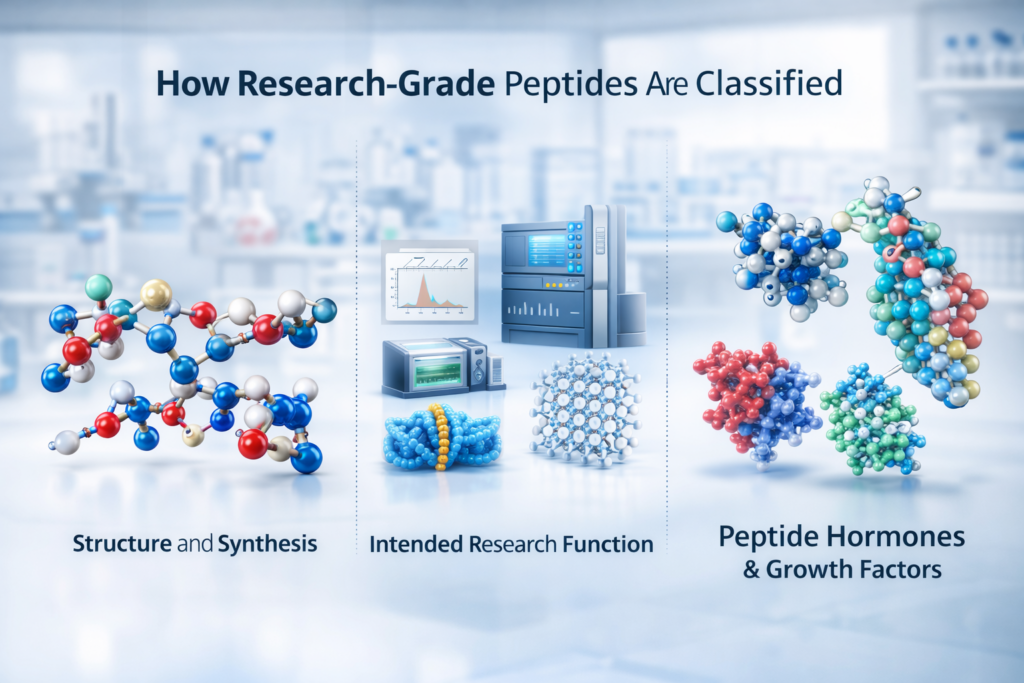
Rather than being organised by brand or product line, research-grade peptides are typically classified by structure, function, and intended research application.
Most research peptides fall into several broad structural categories:
These structural distinctions influence synthesis complexity, impurity risk, and analytical requirements.
From a functional perspective, research-grade peptides are commonly grouped as:
Understanding these categories helps laboratories define appropriate handling, storage, and approval pathways. research-grade peptides 2026
Peptide hormones and growth-factor-related sequences represent a special case. They play a critical role in endocrinology, metabolism, and signalling research, yet they are also explicitly listed as prohibited substances in sporting and regulatory contexts.
This dual status means that, in 2026, laboratories working with such peptides must maintain particularly strong documentation demonstrating purely experimental, non-therapeutic intent, along with controlled access and traceability. research-grade peptides 2026
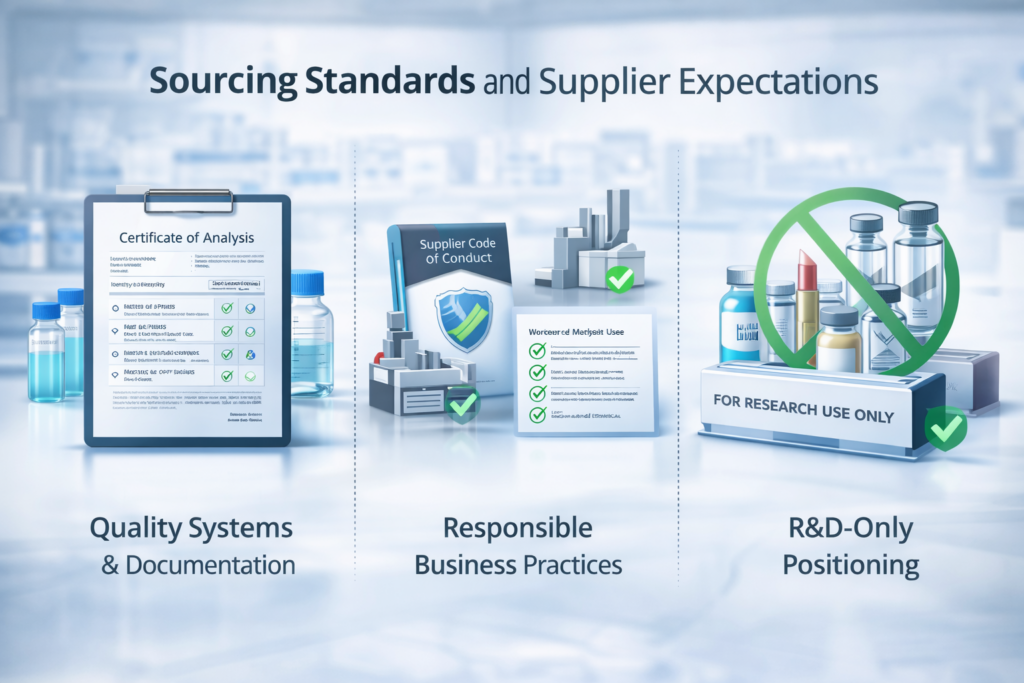
For laboratories and institutions, responsible peptide sourcing now extends well beyond basic purity claims.
Even for non-GMP research materials, there is growing expectation that suppliers operate under “GMP-like” conditions. This typically includes:
Such documentation supports reproducibility and allows laboratories to demonstrate due diligence during audits or collaborative projects. research-grade peptides 2026
Many leading peptide manufacturers publish supplier or business partner codes of conduct. These documents address:
For research institutions, sourcing from suppliers with transparent governance frameworks helps align procurement with institutional policies and external expectations. research-grade peptides 2026
Reputable research peptide suppliers clearly state that products are supplied “for research use only”. They exclude medical, therapeutic, cosmetic, or dietary claims and avoid marketing peptides for human administration.
In some cases, distribution agreements may restrict resale outside professional research environments or require institutional purchasing, reinforcing responsible control over compounds prone to misuse. research-grade peptides 2026
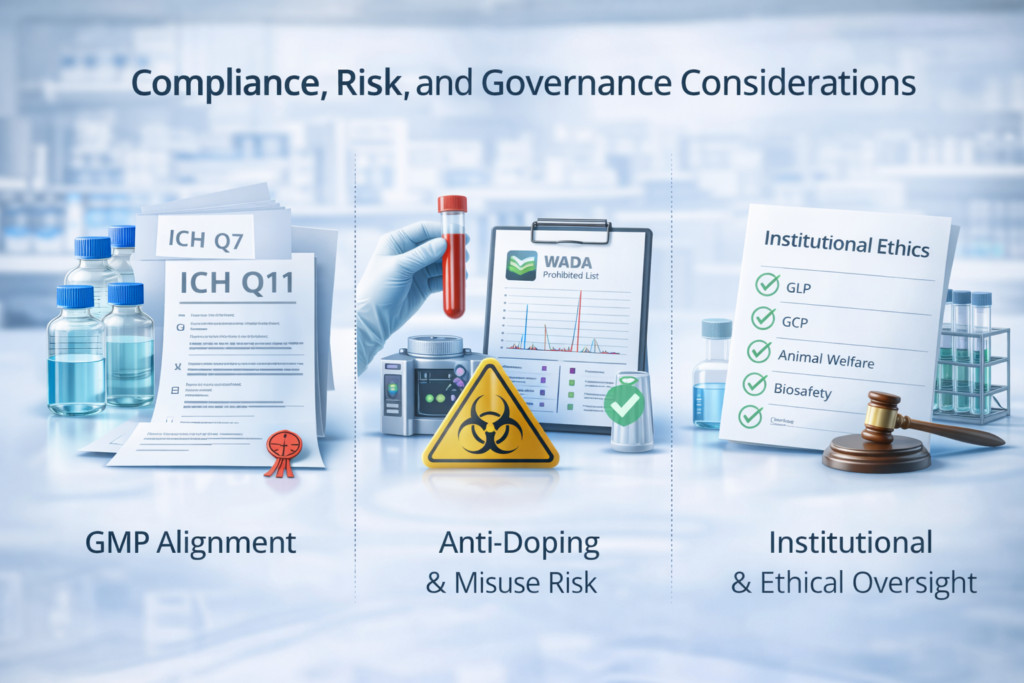
Although research-grade peptides are not regulated medicines, laboratories increasingly align procurement and handling with recognised guidance such as ICH Q7 and Q11. These frameworks help define appropriate control strategies, especially around critical synthesis steps and impurity management.
Risk-based evaluation of SPPS processes, starting materials, and analytical methods supports consistent research outcomes and smoother transitions should projects advance. research-grade peptides 2026
The World Anti-Doping Agency (WADA) and related research highlight the complexity of detecting synthetic peptides in biological systems. Laboratories handling peptide hormones or growth-factor mimetics therefore have strong incentives to document chain of custody, storage conditions, and research-only use.
Clear internal policies help mitigate diversion risk and protect institutional reputation.
Biopharmaceutical and research organisations increasingly mirror industry codes of conduct, emphasising:
Where peptide research involves animal models or human biological samples, laboratories must also comply with animal welfare regulations, biosafety standards, and human tissue legislation, even when the peptides themselves are not regulated medicines. research-grade peptides 2026
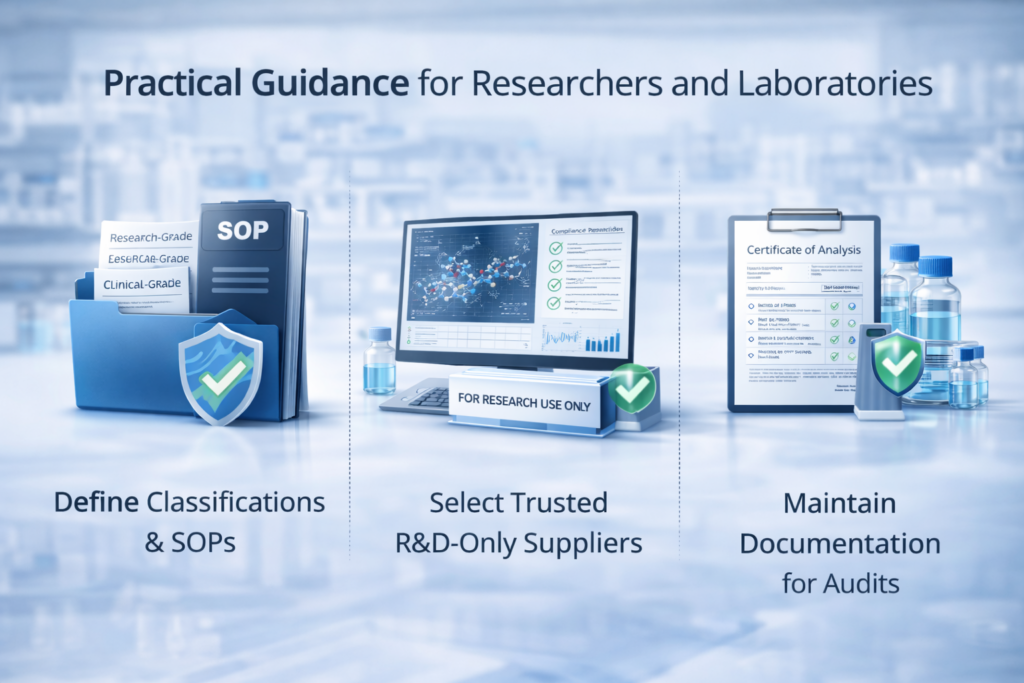
Research organisations are encouraged to:
When sourcing research-grade peptides, laboratories should prioritise suppliers that:
Sources that promote peptides with performance, cosmetic, or therapeutic claims should be avoided, as they blur regulatory boundaries. research-grade peptides 2026
Maintaining organised records of certificates of analysis, supplier qualifications, and internal risk assessments supports audit readiness. Referencing recognised guidance, such as ICH frameworks, can strengthen institutional compliance reviews.
In 2026, research-grade peptides remain indispensable tools across scientific disciplines. At the same time, evolving expectations around quality, traceability, compliance, and ethical sourcing mean that laboratories must approach peptide procurement and use with greater rigour.
Clear non-clinical positioning, responsible supplier selection, and strong documentation practices form the foundation of sustainable peptide research in modern laboratory environments. research-grade peptides 2026
All peptide compounds discussed in this article are intended strictly for Research & Development purposes only.
They are not for human consumption, medical treatment, cosmetic application, or veterinary use.
Research-grade peptides are synthetic peptide compounds supplied strictly for laboratory and experimental use. They are intended for non-clinical research activities such as molecular biology, pharmacology, analytical testing, and preclinical studies, and are not approved for human or veterinary use. research-grade peptides 2026
“Research Use Only” indicates that a peptide is supplied exclusively for non-human, non-clinical research purposes. Such materials are not authorised for medical treatment, cosmetic application, dietary supplementation, or any form of human administration.
In 2026, research-grade peptides are commonly used as tool compounds in receptor pharmacology, cell-signalling studies, enzyme assays, imaging research, biomaterials development, and other experimental laboratory applications under controlled research conditions. research-grade peptides 2026
Research-grade peptides are not manufactured as clinical or pharmaceutical products. However, many suppliers now apply GMP-like quality principles, such as controlled synthesis, impurity monitoring, and batch traceability, to support reproducibility and responsible research practices.
Research-grade peptides are intended solely for experimental research and are not approved for clinical trials or therapeutic use. Clinical-grade peptides are manufactured under strict pharmaceutical regulations and require extensive regulatory approval before human use. research-grade peptides 2026
Responsible sourcing ensures that research-grade peptides meet expected quality, traceability, and documentation standards. Reputable suppliers provide clear R&D-only labelling, analytical data, and ethical business practices, helping laboratories meet institutional and regulatory expectations.
Peptide hormones and growth-factor-related sequences are valuable research tools but are also associated with misuse in non-research contexts. Because of this dual-use risk, laboratories must document strict research-only intent, controlled handling, and appropriate governance when working with these compounds. research-grade peptides 2026
Typical documentation includes a certificate of analysis, batch identification, purity and identity testing data (such as HPLC or mass spectrometry), and information on known impurities or residual solvents. This documentation supports audit readiness and research reproducibility.
While research-grade peptides are not regulated medicines, laboratories often reference international guidance such as ICH Q7 and Q11 to support risk-based quality controls, supplier qualification, and internal governance for experimental materials. research-grade peptides 2026
No. Research-grade peptides discussed in this article are supplied strictly for Research & Development purposes only and are not intended for human consumption, medical treatment, cosmetic use, or veterinary application.
All peptide compounds referenced are intended strictly for Research & Development purposes only and must not be used for human or animal administration. research-grade peptides 2026