
🇬🇧 UK Based Supplier | 🔒 Secure

Peptides Copper Explained: How They Work, Benefits & Research Uses (2026)

peptides copper, copper peptides, copper peptide research, copper peptides uk, copper peptide ghk, ghk-cu copper peptide, copper tripeptide research, copper peptides skin research, copper peptides hair research, copper peptides wound healing research, copper peptide mechanism of action, copper peptides how they work, copper peptides collagen research, copper peptides elastin research, copper peptides angiogenesis research, copper peptides antioxidant research, copper peptides anti inflammatory research, copper peptides regenerative research, copper peptides anti ageing research, copper peptides dermatology research, copper peptides cosmetic science, copper peptides formulation research, copper peptides laboratory use, copper peptides research use only, copper peptides r&d uk, copper peptides in vitro research, copper peptides ex vivo research, copper peptides cell culture studies, copper peptides fibroblast research, copper peptides extracellular matrix research, copper peptides ecm remodelling, copper peptides lysyl oxidase research, copper peptides collagen cross linking, copper peptides wound repair research, copper peptides tissue regeneration, copper peptides skin regeneration research, copper peptides barrier repair research, copper peptides post procedure recovery research, copper peptides inflammation control research, copper peptides oxidative stress research, copper peptides sod enzyme research, copper peptides cytokine modulation, copper peptides vegf research, copper peptides tgf beta research, copper peptides angiogenic factors, copper peptides granulation tissue research, copper peptides dermal thickness research, copper peptides skin firmness research, copper peptides wrinkle research studies, copper peptides hair follicle research, copper peptides hair growth research, copper peptides scalp research, copper peptides telogen effluvium research, copper peptides follicle cycling research, copper peptides hair density research, copper peptides hair shedding research, copper peptides regenerative hair research, copper peptides wound dressing research, copper peptides hydrogel research, copper peptides gel formulation research, copper peptides delivery systems, copper peptides formulation stability research, copper peptides dose response research, copper peptides low concentration research, copper peptides safety research context, copper peptides experimental compounds, copper peptides peptide copper complex, copper peptides metal peptide complex, copper peptides peptide carrier research, copper peptides copper transport research, copper peptides bioavailability research, copper peptides cellular uptake research, copper peptides skin signalling research, copper peptides peptide signalling pathways, copper peptides growth factor modulation, copper peptides cellular communication research, copper peptides peptide mediated regeneration, copper peptides scientific studies, copper peptides peer reviewed research, copper peptides research review, copper peptides clinical research context, copper peptides non clinical research, copper peptides cosmetic ingredient research, copper peptides research grade, copper peptides high purity research, copper peptides lab grade uk, copper peptides research supplier uk, copper peptides labgradepeptides uk, copper peptides research sourcing uk, copper peptides compliant sourcing uk, copper peptides mhra research context, copper peptides uk legality research, copper peptides research only uk, copper peptides not for human use, copper peptides academic research, copper peptides formulation chemist research, copper peptides university research, copper peptides biotech skincare research, copper peptides regenerative medicine research, copper peptides translational research context, copper peptides ageing research models, copper peptides skin biology uk, copper peptides research blog uk, copper peptides explained research, copper peptides science based skincare research, copper peptides peptide chemistry research, copper peptides copper ion delivery research, copper peptides controlled copper delivery, copper peptides peptide copper binding, copper peptides biological copper transport, copper peptides tissue remodelling research, copper peptides wound closure research, copper peptides hair restoration research context, copper peptides follicular stem cell research

Introduction: Why Peptides Copper Matter in Research

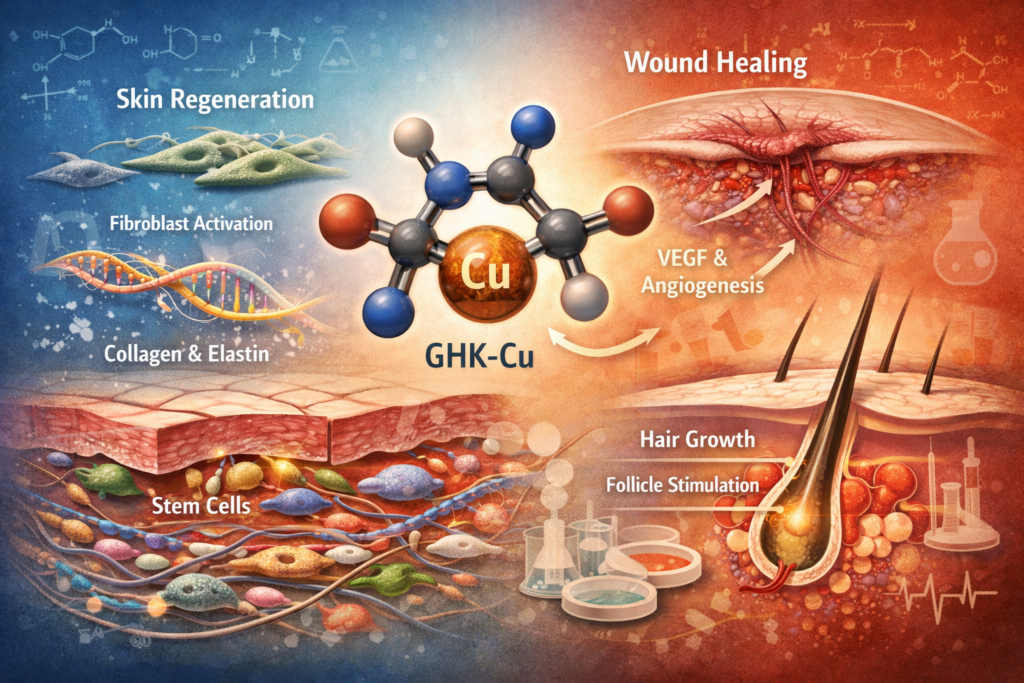
Copper peptides are a unique class of bioactive compounds formed when a short peptide—most commonly the tripeptide GHK (glycyl-L-histidyl-L-lysine)—binds a copper ion to create a stable, biologically active complex. Among these, GHK-Cu has become one of the most widely researched copper peptides due to its broad activity across skin regeneration, wound repair, and hair biology. peptides copper

In biological systems, copper is an essential trace element involved in numerous enzymatic processes, including collagen cross-linking, antioxidant defence, angiogenesis, and cellular energy metabolism. The peptide component acts as a carrier, delivering copper into cells in a controlled and bioavailable form. This combination transforms copper peptides into powerful signalling molecules rather than simple nutrient sources.

From a scientific perspective, copper peptides are not valued as finished cosmetic ingredients, but as research actives that allow laboratories to study how skin and hair tissues respond to regenerative and anti-inflammatory signals. As a result, copper peptides are frequently used in in-vitro cell culture, ex-vivo skin models, and formulation research, where precise control over concentration and delivery is essential.

For UK-based researchers and formulation scientists, it is important to clearly distinguish between consumer “copper peptide serums” and pure copper peptide reagents. Research focuses on the latter—isolated compounds such as GHK or GHK-Cu—used to investigate collagen synthesis, extracellular matrix remodelling, wound healing, and follicle biology under controlled laboratory conditions. peptides copper

Suppliers such as LabGradePeptides.uk support this work by providing research-grade copper peptide actives supplied strictly for Research & Development (R&D) and in-vitro use. This allows scientists to work with high-purity copper peptides while maintaining a clear separation between laboratory research and cosmetic or human application.

What Are Copper Peptides?

peptides copper, copper peptides, copper peptide research, copper peptides uk, copper peptide ghk, ghk-cu copper peptide, copper tripeptide research, copper peptides skin research, copper peptides hair research, copper peptides wound healing research, copper peptide mechanism of action, copper peptides how they work, copper peptides collagen research, copper peptides elastin research, copper peptides angiogenesis research, copper peptides antioxidant research, copper peptides anti inflammatory research, copper peptides regenerative research, copper peptides anti ageing research, copper peptides dermatology research, copper peptides cosmetic science, copper peptides formulation research, copper peptides laboratory use, copper peptides research use only, copper peptides r&d uk, copper peptides in vitro research, copper peptides ex vivo research, copper peptides cell culture studies, copper peptides fibroblast research, copper peptides extracellular matrix research, copper peptides ecm remodelling, copper peptides lysyl oxidase research, copper peptides collagen cross linking, copper peptides wound repair research, copper peptides tissue regeneration, copper peptides skin regeneration research, copper peptides barrier repair research, copper peptides post procedure recovery research, copper peptides inflammation control research, copper peptides oxidative stress research, copper peptides sod enzyme research, copper peptides cytokine modulation, copper peptides vegf research, copper peptides tgf beta research, copper peptides angiogenic factors, copper peptides granulation tissue research, copper peptides dermal thickness research, copper peptides skin firmness research, copper peptides wrinkle research studies, copper peptides hair follicle research, copper peptides hair growth research, copper peptides scalp research, copper peptides telogen effluvium research, copper peptides follicle cycling research, copper peptides hair density research, copper peptides hair shedding research, copper peptides regenerative hair research, copper peptides wound dressing research, copper peptides hydrogel research, copper peptides gel formulation research, copper peptides delivery systems, copper peptides formulation stability research, copper peptides dose response research, copper peptides low concentration research, copper peptides safety research context, copper peptides experimental compounds, copper peptides peptide copper complex, copper peptides metal peptide complex, copper peptides peptide carrier research, copper peptides copper transport research, copper peptides bioavailability research, copper peptides cellular uptake research, copper peptides skin signalling research, copper peptides peptide signalling pathways, copper peptides growth factor modulation, copper peptides cellular communication research, copper peptides peptide mediated regeneration, copper peptides scientific studies, copper peptides peer reviewed research, copper peptides research review, copper peptides clinical research context, copper peptides non clinical research, copper peptides cosmetic ingredient research, copper peptides research grade, copper peptides high purity research, copper peptides lab grade uk, copper peptides research supplier uk, copper peptides labgradepeptides uk, copper peptides research sourcing uk, copper peptides compliant sourcing uk, copper peptides mhra research context, copper peptides uk legality research, copper peptides research only uk, copper peptides not for human use, copper peptides academic research, copper peptides formulation chemist research, copper peptides university research, copper peptides biotech skincare research, copper peptides regenerative medicine research, copper peptides translational research context, copper peptides ageing research models, copper peptides skin biology uk, copper peptides research blog uk, copper peptides explained research, copper peptides science based skincare research, copper peptides peptide chemistry research, copper peptides copper ion delivery research, copper peptides controlled copper delivery, copper peptides peptide copper binding, copper peptides biological copper transport, copper peptides tissue remodelling research, copper peptides wound closure research, copper peptides hair restoration research context, copper peptides follicular stem cell research

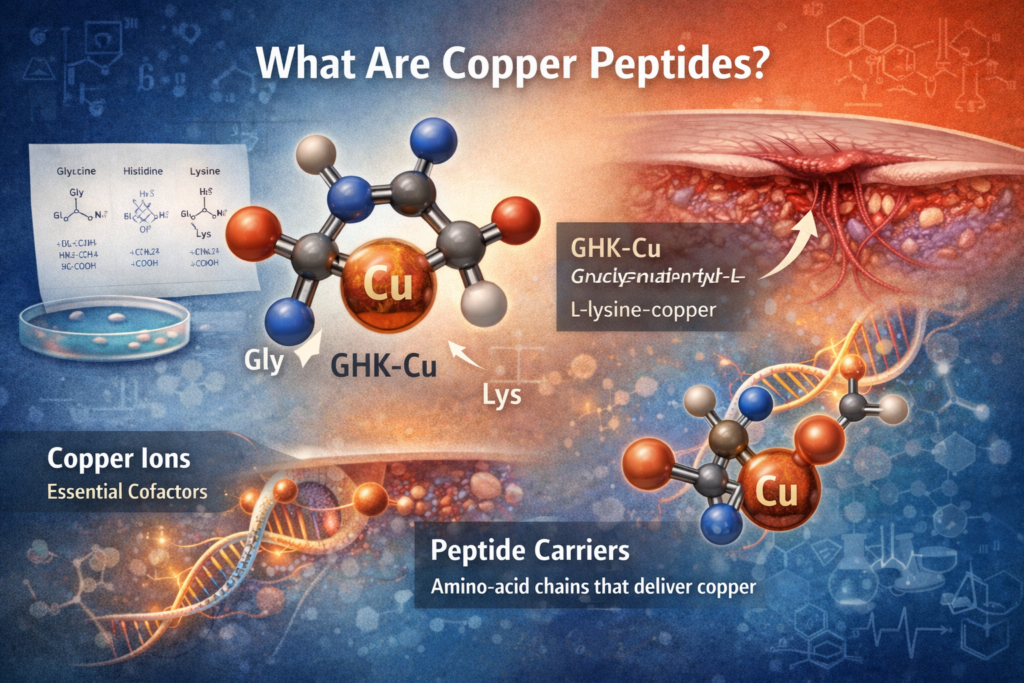
Copper peptides are short chains of amino acids with a strong affinity for copper ions, forming stable peptide–copper complexes that act as biologically active signalling molecules. The most well-known example is GHK-Cu (glycyl-L-histidyl-L-lysine-copper), a naturally occurring compound found in human plasma, saliva, and urine. peptides copper

Structure and Natural Role

The tripeptide GHK binds copper (Cu²⁺) tightly, creating a complex that can safely transport copper into cells. This is significant because free copper ions can be reactive and potentially damaging, whereas copper delivered via a peptide carrier is controlled and bioavailable.

In normal physiology, copper plays a critical role as a cofactor for enzymes involved in:

  • Collagen and elastin cross-linking (via lysyl oxidase)
  • Antioxidant defence (including superoxide dismutase activity)
  • Cellular energy production
  • Pigmentation and tissue repair processes

The peptide component ensures copper reaches the correct cellular targets without causing oxidative stress. peptides copper

Copper Peptides in Research Settings

In Research & Development (R&D) environments, copper peptides such as GHK-Cu are used as isolated, high-purity reagents rather than as finished cosmetic ingredients. Researchers incorporate these peptides into:

  • Experimental serums or gels
  • Hydrogels and wound-healing matrices
  • Cell-culture media and ex-vivo skin systems

This approach allows precise control over concentration, exposure time, and delivery method—key factors for studying mechanisms like collagen synthesis, angiogenesis, and inflammatory modulation. peptides copper

Research Actives vs Finished Cosmetics

While consumer skincare products often market “copper peptide serums,” laboratory research begins one step earlier by working directly with the pure peptide–copper complex. This distinction is important because:

  • Finished cosmetics contain multiple variables that can obscure results
  • Research requires reproducibility and traceability
  • Mechanistic studies depend on known peptide purity and composition

For UK laboratories and formulation scientists, sourcing copper peptides from a research-focused supplier such as LabGradePeptides.uk enables controlled experimentation while keeping all work firmly within a research-only, non-clinical context. peptides copper

How Copper Peptides Work (Mechanisms)

peptides copper, copper peptides, copper peptide research, copper peptides uk, copper peptide ghk, ghk-cu copper peptide, copper tripeptide research, copper peptides skin research, copper peptides hair research, copper peptides wound healing research, copper peptide mechanism of action, copper peptides how they work, copper peptides collagen research, copper peptides elastin research, copper peptides angiogenesis research, copper peptides antioxidant research, copper peptides anti inflammatory research, copper peptides regenerative research, copper peptides anti ageing research, copper peptides dermatology research, copper peptides cosmetic science, copper peptides formulation research, copper peptides laboratory use, copper peptides research use only, copper peptides r&d uk, copper peptides in vitro research, copper peptides ex vivo research, copper peptides cell culture studies, copper peptides fibroblast research, copper peptides extracellular matrix research, copper peptides ecm remodelling, copper peptides lysyl oxidase research, copper peptides collagen cross linking, copper peptides wound repair research, copper peptides tissue regeneration, copper peptides skin regeneration research, copper peptides barrier repair research, copper peptides post procedure recovery research, copper peptides inflammation control research, copper peptides oxidative stress research, copper peptides sod enzyme research, copper peptides cytokine modulation, copper peptides vegf research, copper peptides tgf beta research, copper peptides angiogenic factors, copper peptides granulation tissue research, copper peptides dermal thickness research, copper peptides skin firmness research, copper peptides wrinkle research studies, copper peptides hair follicle research, copper peptides hair growth research, copper peptides scalp research, copper peptides telogen effluvium research, copper peptides follicle cycling research, copper peptides hair density research, copper peptides hair shedding research, copper peptides regenerative hair research, copper peptides wound dressing research, copper peptides hydrogel research, copper peptides gel formulation research, copper peptides delivery systems, copper peptides formulation stability research, copper peptides dose response research, copper peptides low concentration research, copper peptides safety research context, copper peptides experimental compounds, copper peptides peptide copper complex, copper peptides metal peptide complex, copper peptides peptide carrier research, copper peptides copper transport research, copper peptides bioavailability research, copper peptides cellular uptake research, copper peptides skin signalling research, copper peptides peptide signalling pathways, copper peptides growth factor modulation, copper peptides cellular communication research, copper peptides peptide mediated regeneration, copper peptides scientific studies, copper peptides peer reviewed research, copper peptides research review, copper peptides clinical research context, copper peptides non clinical research, copper peptides cosmetic ingredient research, copper peptides research grade, copper peptides high purity research, copper peptides lab grade uk, copper peptides research supplier uk, copper peptides labgradepeptides uk, copper peptides research sourcing uk, copper peptides compliant sourcing uk, copper peptides mhra research context, copper peptides uk legality research, copper peptides research only uk, copper peptides not for human use, copper peptides academic research, copper peptides formulation chemist research, copper peptides university research, copper peptides biotech skincare research, copper peptides regenerative medicine research, copper peptides translational research context, copper peptides ageing research models, copper peptides skin biology uk, copper peptides research blog uk, copper peptides explained research, copper peptides science based skincare research, copper peptides peptide chemistry research, copper peptides copper ion delivery research, copper peptides controlled copper delivery, copper peptides peptide copper binding, copper peptides biological copper transport, copper peptides tissue remodelling research, copper peptides wound closure research, copper peptides hair restoration research context, copper peptides follicular stem cell research

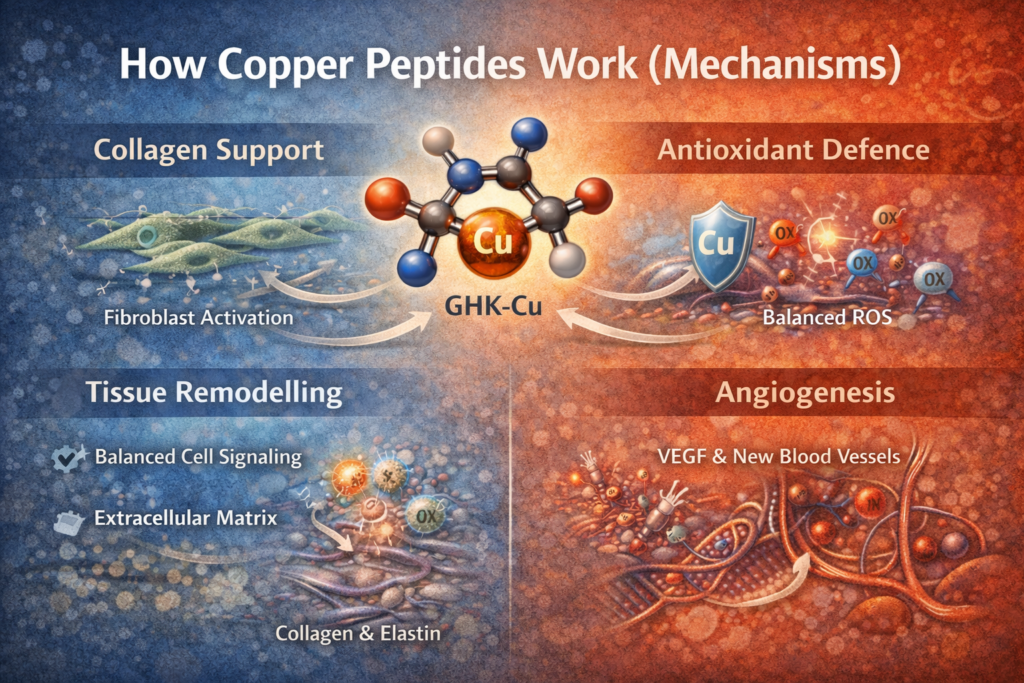
Copper peptide complexes influence multiple cellular and molecular pathways that are central to tissue repair, skin ageing, and hair biology. Their activity comes from the synergy between the peptide carrier and the copper ion, allowing copper to participate in biological processes in a controlled, targeted way.

Collagen & Elastin Synthesis

One of the most studied actions of copper peptides is their effect on the extracellular matrix (ECM):

  • Copper is a required cofactor for lysyl oxidase, the enzyme responsible for cross-linking collagen and elastin fibres. These cross-links give skin and connective tissue strength and elasticity.
  • In fibroblast studies, GHK-Cu has been shown to increase the production of collagen and elastin while also supporting balanced matrix turnover.
  • This dual action—stimulating synthesis while regulating degradation—helps researchers model healthy tissue remodelling rather than uncontrolled scarring. peptides copper

Wound Healing & Angiogenesis

Copper peptides are heavily researched in wound-healing models due to their effects on growth-factor signalling:

  • GHK-Cu upregulates growth factors such as TGF-β, VEGF, and placental growth factor, all of which are involved in angiogenesis and granulation tissue formation.
  • These pathways support new blood vessel growth, oxygen delivery, and nutrient supply to damaged tissue.
  • Experimental models consistently show faster wound closure and improved quality of regenerated tissue when copper is delivered via peptide complexes rather than as free copper ions. peptides copper

Antioxidant Defence

Copper peptides also play a role in protecting tissues from oxidative stress:

  • GHK-Cu increases expression of superoxide dismutase (SOD), a key antioxidant enzyme that neutralises reactive oxygen species (ROS).
  • By reducing oxidative damage, copper peptides help preserve cellular integrity during healing and ageing processes.
  • This antioxidant support is particularly relevant in skin research, where UV exposure and inflammation accelerate matrix breakdown. peptides copper

Anti-Inflammatory Modulation

Beyond regeneration, copper peptides influence inflammatory signalling:

  • Research indicates that copper peptides can downregulate pro-inflammatory cytokines such as IL-6 and TNF-α in skin models.
  • Reduced inflammatory signalling contributes to calmer tissue environments, supporting recovery and barrier repair.
  • This makes copper peptides useful in studies of sensitive skin, post-procedure recovery, and chronic inflammation models. peptides copper

Why These Mechanisms Matter for Research

Together, these pathways explain why copper peptides are considered multifunctional research actives. They allow scientists to study:

  • ECM stabilisation and remodelling
  • Angiogenesis and tissue regeneration
  • Oxidative stress and inflammatory balance

To investigate these mechanisms accurately, researchers work with pure copper peptide reagents rather than finished cosmetic products. UK laboratories commonly source compounds like GHK or GHK-Cu from suppliers such as LabGradePeptides.uk, which provides copper peptides strictly for Research & Development and in-vitro use, supporting controlled and compliant mechanistic studies. peptides copper


Main Research Applications of Copper Peptides

Copper peptides are studied across several areas of skin and tissue science because their mechanisms touch regeneration, inflammation control, and structural remodelling. In research settings, they are valued as versatile signalling molecules rather than as cosmetic ingredients. peptides copper


Skin Regeneration & Anti-Ageing Research

Dermatology and cosmetic-science literature consistently highlights GHK-Cu as a regenerative peptide with relevance to skin ageing models.

Key research observations include:

  • Increased collagen and elastin density in dermal models
  • Improved skin firmness and elasticity over time in experimental systems
  • Support for epidermal basal stem cell proliferation and survival
  • Enhanced extracellular matrix (ECM) organisation and stability. peptides copper

In laboratory practice, researchers often work directly with pure copper peptide actives to:

  • Test dose-response effects on fibroblasts
  • Compare copper peptides with other signal or carrier peptides
  • Screen new anti-ageing or barrier-repair formulations in vitro

This approach avoids the variability introduced by finished cosmetic serums and allows more precise mechanistic insight. peptides copper


Wound-Healing Models

Copper peptides are widely used in wound-healing and regenerative medicine research due to their combined effects on angiogenesis, ECM production, and antioxidant defence.

Research applications include:

  • Incorporation into hydrogels, dressings, and culture media
  • Studies on angiogenic factor expression and blood-vessel formation
  • Evaluation of granulation tissue quality and wound-closure rates
  • Modelling of post-injury barrier repair and inflammation resolution

Because copper peptides deliver copper in a controlled form, they are often preferred over free copper salts in experimental wound-healing systems. peptides copper


Hair Biology & Scalp Research

Copper peptides are also explored in hair-growth and scalp-health research, particularly for their influence on follicle cycling and inflammation.

Reported research areas include:

  • Increased hair follicle size and prolonged anagen (growth) phase in animal models
  • Reduced hair shedding and improved density in small clinical-style studies
  • Anti-inflammatory effects relevant to scalp irritation and follicular stress

These findings make copper peptides useful tools for researchers studying:

  • Hair-follicle biology and cycling
  • Telogen effluvium recovery models
  • Scalp inflammation and micro-circulation

For all of these applications—skin, wound, and hair—researchers typically source GHK or GHK-Cu as isolated reagents from suppliers such as LabGradePeptides.uk, ensuring high purity, traceability, and suitability for in-vitro and R&D work only. peptides copper

Benefits and Limitations of Copper Peptides

peptides copper, copper peptides, copper peptide research, copper peptides uk, copper peptide ghk, ghk-cu copper peptide, copper tripeptide research, copper peptides skin research, copper peptides hair research, copper peptides wound healing research, copper peptide mechanism of action, copper peptides how they work, copper peptides collagen research, copper peptides elastin research, copper peptides angiogenesis research, copper peptides antioxidant research, copper peptides anti inflammatory research, copper peptides regenerative research, copper peptides anti ageing research, copper peptides dermatology research, copper peptides cosmetic science, copper peptides formulation research, copper peptides laboratory use, copper peptides research use only, copper peptides r&d uk, copper peptides in vitro research, copper peptides ex vivo research, copper peptides cell culture studies, copper peptides fibroblast research, copper peptides extracellular matrix research, copper peptides ecm remodelling, copper peptides lysyl oxidase research, copper peptides collagen cross linking, copper peptides wound repair research, copper peptides tissue regeneration, copper peptides skin regeneration research, copper peptides barrier repair research, copper peptides post procedure recovery research, copper peptides inflammation control research, copper peptides oxidative stress research, copper peptides sod enzyme research, copper peptides cytokine modulation, copper peptides vegf research, copper peptides tgf beta research, copper peptides angiogenic factors, copper peptides granulation tissue research, copper peptides dermal thickness research, copper peptides skin firmness research, copper peptides wrinkle research studies, copper peptides hair follicle research, copper peptides hair growth research, copper peptides scalp research, copper peptides telogen effluvium research, copper peptides follicle cycling research, copper peptides hair density research, copper peptides hair shedding research, copper peptides regenerative hair research, copper peptides wound dressing research, copper peptides hydrogel research, copper peptides gel formulation research, copper peptides delivery systems, copper peptides formulation stability research, copper peptides dose response research, copper peptides low concentration research, copper peptides safety research context, copper peptides experimental compounds, copper peptides peptide copper complex, copper peptides metal peptide complex, copper peptides peptide carrier research, copper peptides copper transport research, copper peptides bioavailability research, copper peptides cellular uptake research, copper peptides skin signalling research, copper peptides peptide signalling pathways, copper peptides growth factor modulation, copper peptides cellular communication research, copper peptides peptide mediated regeneration, copper peptides scientific studies, copper peptides peer reviewed research, copper peptides research review, copper peptides clinical research context, copper peptides non clinical research, copper peptides cosmetic ingredient research, copper peptides research grade, copper peptides high purity research, copper peptides lab grade uk, copper peptides research supplier uk, copper peptides labgradepeptides uk, copper peptides research sourcing uk, copper peptides compliant sourcing uk, copper peptides mhra research context, copper peptides uk legality research, copper peptides research only uk, copper peptides not for human use, copper peptides academic research, copper peptides formulation chemist research, copper peptides university research, copper peptides biotech skincare research, copper peptides regenerative medicine research, copper peptides translational research context, copper peptides ageing research models, copper peptides skin biology uk, copper peptides research blog uk, copper peptides explained research, copper peptides science based skincare research, copper peptides peptide chemistry research, copper peptides copper ion delivery research, copper peptides controlled copper delivery, copper peptides peptide copper binding, copper peptides biological copper transport, copper peptides tissue remodelling research, copper peptides wound closure research, copper peptides hair restoration research context, copper peptides follicular stem cell research

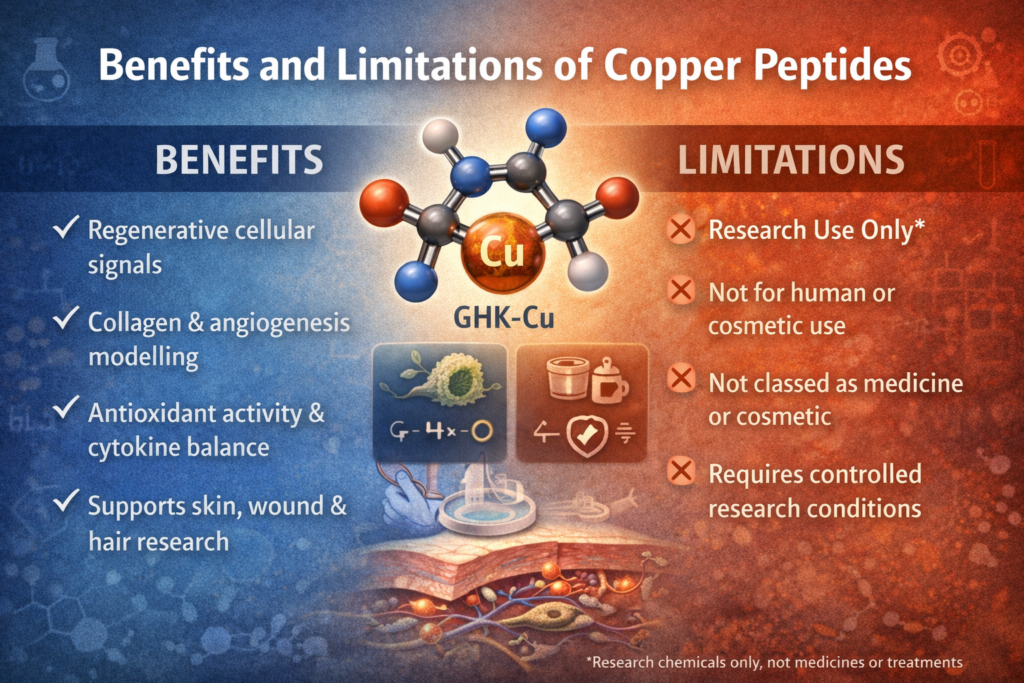
Copper peptides are widely regarded as multifunctional research actives, but their value is best understood when both strengths and constraints are clearly defined. Presenting a balanced view helps keep your blog scientifically accurate and compliant. peptides copper

Key Benefits Highlighted in Research

Across skin, wound, and hair models, copper peptides show several recurring advantages:

  • Regenerative signalling
    Copper peptides support collagen and elastin synthesis while promoting balanced extracellular matrix (ECM) remodelling—important for studying healthy tissue repair rather than scarring.
  • Angiogenesis and wound support
    By upregulating growth factors involved in blood-vessel formation, copper peptides are useful for modelling granulation tissue formation and improved wound closure quality.
  • Antioxidant protection
    Increased expression of antioxidant enzymes (such as superoxide dismutase) helps protect cells from oxidative stress, a key driver of skin ageing and delayed healing.
  • Anti-inflammatory modulation
    Copper peptides can dampen excessive inflammatory signalling, creating a tissue environment more conducive to repair and regeneration.
  • Versatility across models
    The same copper peptide (e.g., GHK-Cu) can be applied to skin, wound, and hair research systems, making it a valuable reference compound in multiple experimental designs. peptides copper

Limitations and Realistic Framing

Despite strong mechanistic support, copper peptides are not universal solutions, and research highlights several limitations:

  • Dose sensitivity
    Copper peptides are active at very low concentrations. Excessive levels may disrupt normal cellular balance, which is why careful dose-response testing is essential in research.
  • Gradual effects
    Benefits such as improved matrix organisation or follicle activity develop over time. Copper peptides do not produce immediate or dramatic changes in short-term studies.
  • Formulation dependence
    Stability, delivery system, and interaction with other ingredients strongly influence outcomes. Poor formulation can reduce activity even when peptide purity is high.
  • Context matters
    Experimental results depend heavily on the model used (cell culture, ex-vivo skin, animal systems). Findings may not translate directly across different systems. peptides copper

Responsible Positioning in Your Blog

To remain accurate and compliant:

  • Emphasise mechanisms and experimental outcomes, not cosmetic promises
  • Avoid language suggesting instant results or therapeutic treatment
  • Clearly state that copper peptides discussed are research actives, not finished products

By presenting copper peptides as powerful but context-dependent research tools, your blog will educate readers while maintaining scientific credibility and appropriate expectations. peptides copper
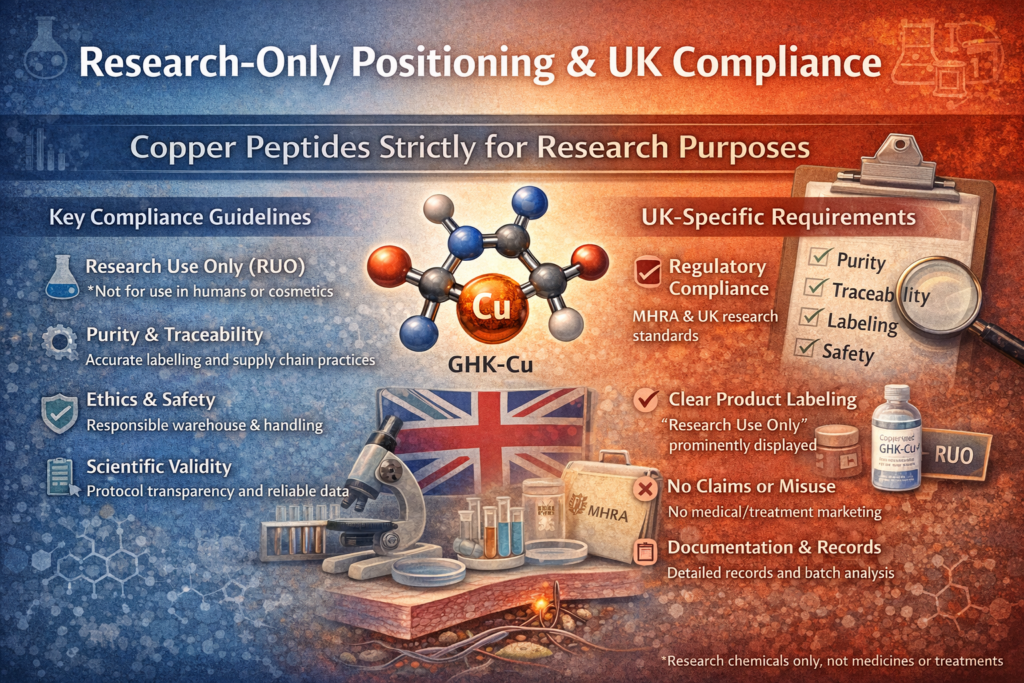

Research-Only Positioning & UK Compliance

peptides copper, copper peptides, copper peptide research, copper peptides uk, copper peptide ghk, ghk-cu copper peptide, copper tripeptide research, copper peptides skin research, copper peptides hair research, copper peptides wound healing research, copper peptide mechanism of action, copper peptides how they work, copper peptides collagen research, copper peptides elastin research, copper peptides angiogenesis research, copper peptides antioxidant research, copper peptides anti inflammatory research, copper peptides regenerative research, copper peptides anti ageing research, copper peptides dermatology research, copper peptides cosmetic science, copper peptides formulation research, copper peptides laboratory use, copper peptides research use only, copper peptides r&d uk, copper peptides in vitro research, copper peptides ex vivo research, copper peptides cell culture studies, copper peptides fibroblast research, copper peptides extracellular matrix research, copper peptides ecm remodelling, copper peptides lysyl oxidase research, copper peptides collagen cross linking, copper peptides wound repair research, copper peptides tissue regeneration, copper peptides skin regeneration research, copper peptides barrier repair research, copper peptides post procedure recovery research, copper peptides inflammation control research, copper peptides oxidative stress research, copper peptides sod enzyme research, copper peptides cytokine modulation, copper peptides vegf research, copper peptides tgf beta research, copper peptides angiogenic factors, copper peptides granulation tissue research, copper peptides dermal thickness research, copper peptides skin firmness research, copper peptides wrinkle research studies, copper peptides hair follicle research, copper peptides hair growth research, copper peptides scalp research, copper peptides telogen effluvium research, copper peptides follicle cycling research, copper peptides hair density research, copper peptides hair shedding research, copper peptides regenerative hair research, copper peptides wound dressing research, copper peptides hydrogel research, copper peptides gel formulation research, copper peptides delivery systems, copper peptides formulation stability research, copper peptides dose response research, copper peptides low concentration research, copper peptides safety research context, copper peptides experimental compounds, copper peptides peptide copper complex, copper peptides metal peptide complex, copper peptides peptide carrier research, copper peptides copper transport research, copper peptides bioavailability research, copper peptides cellular uptake research, copper peptides skin signalling research, copper peptides peptide signalling pathways, copper peptides growth factor modulation, copper peptides cellular communication research, copper peptides peptide mediated regeneration, copper peptides scientific studies, copper peptides peer reviewed research, copper peptides research review, copper peptides clinical research context, copper peptides non clinical research, copper peptides cosmetic ingredient research, copper peptides research grade, copper peptides high purity research, copper peptides lab grade uk, copper peptides research supplier uk, copper peptides labgradepeptides uk, copper peptides research sourcing uk, copper peptides compliant sourcing uk, copper peptides mhra research context, copper peptides uk legality research, copper peptides research only uk, copper peptides not for human use, copper peptides academic research, copper peptides formulation chemist research, copper peptides university research, copper peptides biotech skincare research, copper peptides regenerative medicine research, copper peptides translational research context, copper peptides ageing research models, copper peptides skin biology uk, copper peptides research blog uk, copper peptides explained research, copper peptides science based skincare research, copper peptides peptide chemistry research, copper peptides copper ion delivery research, copper peptides controlled copper delivery, copper peptides peptide copper binding, copper peptides biological copper transport, copper peptides tissue remodelling research, copper peptides wound closure research, copper peptides hair restoration research context, copper peptides follicular stem cell research

When writing about copper peptides, it is essential to clearly distinguish scientific research use from consumer or clinical application. This protects both readers and suppliers while keeping your blog aligned with UK regulatory expectations.

Copper Peptides as Research Actives

In the UK, copper peptides such as GHK and GHK-Cu are legally supplied only when positioned as research chemicals. In this context, they are used to:

  • Study collagen synthesis and extracellular matrix remodelling
  • Model wound healing and angiogenesis in vitro
  • Explore hair-follicle biology and scalp inflammation
  • Test formulation stability and peptide signalling in controlled systems

They are not sold or approved as medicines, cosmetics, or supplements unless specifically authorised through the appropriate regulatory pathways. peptides copper

What “Research Use Only” Means

“Research Use Only” (RUO) indicates that a peptide:

  • Is intended for laboratory, in-vitro, or ex-vivo research
  • Is not for human or veterinary application
  • Should not be marketed with cosmetic, dermatological, or therapeutic claims
  • Must not include usage instructions for topical or personal use

This designation allows legitimate scientific work to proceed while preventing misuse or misleading promotion.

UK Regulatory Context

Under UK medicines and consumer-protection frameworks:

  • Any substance marketed for treating skin, wounds, or hair in humans may be classed as a medicine or cosmetic, triggering strict regulatory requirements
  • Copper peptides avoid this classification only when supplied and described strictly as research materials

Clear labelling, scientific descriptions, and avoidance of consumer claims are therefore essential. peptides copper

Why Supplier Positioning Matters

Working with a research-focused supplier helps ensure compliance and clarity. Suppliers such as LabGradePeptides.uk support this by:

  • Supplying copper peptides strictly for R&D and laboratory use
  • Avoiding marketing language aimed at skincare consumers
  • Providing materials suitable for controlled experimental work

This approach allows researchers, formulation chemists, and academic labs to explore copper peptide mechanisms responsibly—while keeping all activity firmly within a research-only, UK-compliant framework.


Conclusion: Copper Peptides as Versatile Research Actives

Copper peptides occupy a unique position in skin, wound, and hair research because they combine the biological importance of copper as an essential cofactor with the targeting precision of a peptide carrier. Compounds such as GHK-Cu have demonstrated broad activity across collagen remodelling, angiogenesis, antioxidant defence, and inflammatory regulation—making them valuable tools for studying tissue regeneration and ageing-related processes.

Rather than functioning as finished cosmetic ingredients, copper peptides are best understood as foundational research actives. In laboratory and formulation science, their value lies in enabling controlled experiments that probe how cells respond to regenerative signals, how extracellular matrix structure is maintained, and how hair follicles and skin barriers recover from stress or injury.

At the same time, responsible communication and sourcing are critical. Copper peptides discussed in this context are not medicines, cosmetics, or treatments and are not intended for human application. Their role is firmly within Research & Development, where purity, traceability, and compliance determine experimental reliability.

For UK-based researchers and formulators, sourcing copper peptides from a specialist supplier such as LabGradePeptides.uk helps maintain this distinction. By providing research-grade copper peptide actives strictly for R&D use, such suppliers support ethical, compliant exploration of copper peptide biology—allowing science to advance without blurring the line between laboratory research and consumer application.

Used appropriately, copper peptides will continue to serve as powerful, multifunctional tools in skin regeneration, wound-healing, and hair-biology research, shaping future innovations while remaining grounded in rigorous scientific practice.


Frequently Asked Questions About Copper Peptides

1. What are copper peptides?

Copper peptides are short amino-acid chains that bind copper ions, forming biologically active complexes such as GHK-Cu, which are studied for their roles in skin regeneration, wound repair, and hair biology.


2. What does GHK-Cu stand for?

GHK-Cu stands for glycyl-L-histidyl-L-lysine-copper, a naturally occurring copper peptide found in human plasma that is widely researched for regenerative and anti-inflammatory signalling.


3. How do copper peptides work in the skin?

Copper peptides work by delivering copper into cells in a controlled way, supporting collagen cross-linking, antioxidant defence, angiogenesis, and balanced tissue remodelling in experimental models.


4. Are copper peptides good for anti-ageing research?

Yes. Research shows copper peptides can support collagen and elastin synthesis, dermal thickness, and skin firmness, making them valuable tools in anti-ageing and skin-regeneration studies.


5. What role do copper peptides play in wound healing?

In wound-healing research, copper peptides promote angiogenesis, granulation tissue formation, antioxidant protection, and faster wound closure, improving the quality of regenerated tissue.


6. Can copper peptides help with hair growth research?

Copper peptides are studied in hair-biology research for their ability to support hair-follicle size, growth-phase duration, and scalp inflammation control, with some studies comparing them to standard hair-growth compounds.


7. Are copper peptides safe?

In research contexts, copper peptides are considered biologically active at very low concentrations, which is why dose-response testing and controlled experimental conditions are essential.


8. Are copper peptides legal in the UK?

Yes. Copper peptides can be legally sold in the UK when supplied strictly for Research & Development use and clearly labelled as not for human or cosmetic application.


9. What does “Research Use Only” mean for copper peptides?

“Research Use Only” means the peptide is intended for laboratory, in-vitro, or ex-vivo research, not for human use, cosmetic application, or medical treatment.


10. Where can UK labs source copper peptides for research?

UK laboratories and formulators can source research-grade copper peptides such as GHK or GHK-Cu from LabGradePeptides.uk, which supplies peptides strictly for R&D purposes.