
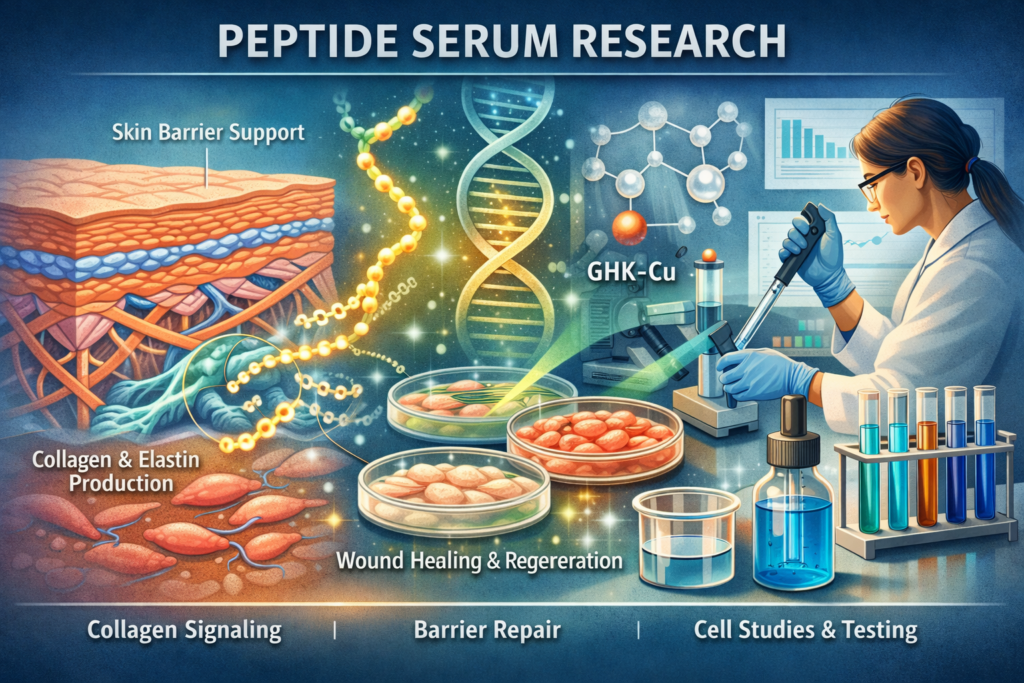
Peptide serums have become a major focus in modern skincare research due to their ability to deliver short, biologically active chains of amino acids that interact with key skin processes. In both cosmetic science and laboratory research, peptides are studied for how they support collagen and elastin synthesis, skin barrier repair, and cellular signalling, rather than for any immediate or medical effect.
In consumer skincare, peptide serums are typically lightweight, water-based formulations designed to sit close to the skin and deliver active ingredients efficiently. In a research context, however, the focus shifts away from finished cosmetic products and toward the raw peptide actives themselves—such as signal peptides, carrier peptides, and collagen-related fragments—that scientists can study in isolation or incorporate into experimental formulations. Peptide Serum
Peptides are especially valuable in skin research because they function as messengers, helping researchers understand how skin cells (particularly fibroblasts and keratinocytes) respond to signals related to ageing, wound healing, inflammation, and barrier disruption. This makes peptide serums a useful model system for exploring skin remodelling and regeneration pathways under controlled laboratory conditions.
For UK-based researchers, formulation chemists, and academic labs, it is important to distinguish clearly between cosmetic self-application and research use. Peptide compounds can be legally sourced in the UK when they are supplied strictly for Research & Development (R&D) and are not marketed as finished skincare products or treatments. Peptide Serum
Suppliers such as LabGradePeptides.uk support this distinction by providing research-grade peptide compounds and blends intended solely for laboratory, in-vitro, or formulation research. This allows scientists to investigate peptide serum concepts responsibly—testing collagen signalling, barrier repair, or regenerative mechanisms—while remaining aligned with UK compliance and ethical standards.
A peptide serum is a lightweight, typically water-based formulation designed to deliver bioactive peptides to the skin more efficiently than heavier creams or occlusive products. In cosmetic science, serums are favoured because their lower molecular weight and simpler composition allow active ingredients to interact more directly with the skin surface. Peptide Serum
Peptide serums are generally characterised by:
These features make serums an ideal vehicle for studying peptide stability, penetration, and signalling effects in controlled environments.
Peptides are short chains of amino acids that serve as the building blocks of proteins like collagen and elastin. In skincare research, peptides are valued not because they replace collagen directly, but because they can signal skin cells to support the production, protection, or remodelling of structural proteins. Peptide Serum
This distinction is important: large collagen molecules mainly sit on the surface and hydrate, whereas smaller peptide fragments and signal peptides are the focus of most laboratory and formulation research.
Finished peptide serums sold to consumers are pre-formulated cosmetics designed for daily use. In contrast, laboratories and formulation scientists often work with:
By sourcing peptide compounds directly, researchers can design custom experimental “serum” prototypes to test collagen signalling, barrier repair, or regenerative mechanisms. Peptide Serum
For UK labs and formulators, sourcing peptides from a research-only supplier such as LabGradePeptides.uk ensures access to high-purity peptide actives intended strictly for R&D and laboratory work—maintaining a clear separation from consumer cosmetics or personal skincare use.
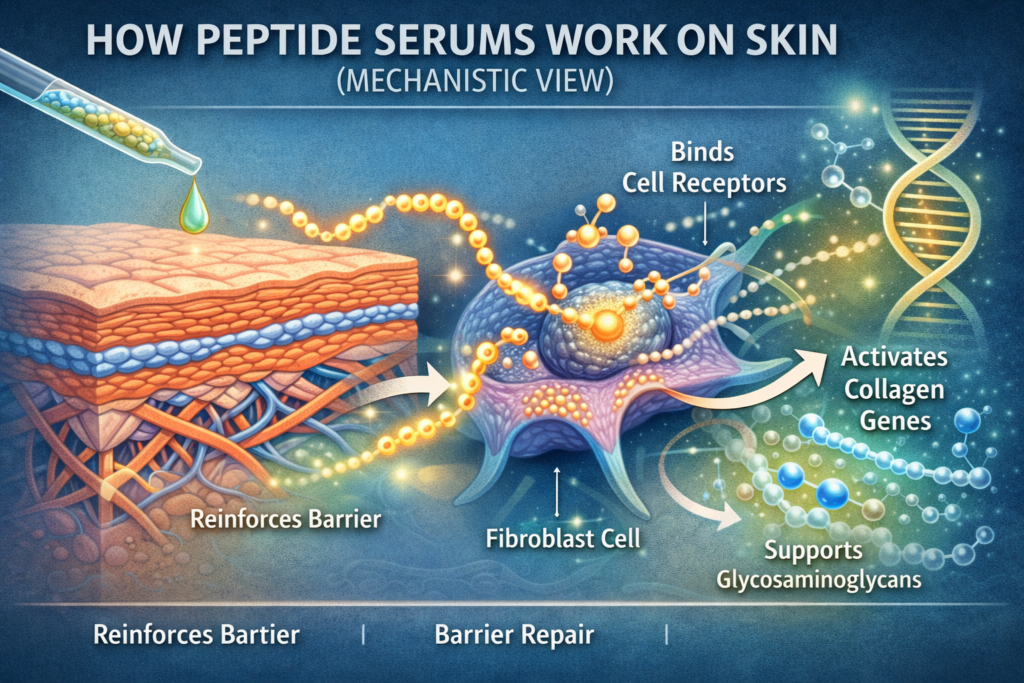
Peptide serums are studied for how they influence cellular communication and structural maintenance within the skin, rather than for any immediate cosmetic effect. In research settings, their value lies in the way specific peptides act as signals, triggering responses in skin cells that relate to ageing, repair, and barrier integrity.
Many peptides used in serum research interact with fibroblasts, the cells responsible for producing collagen, elastin, and other components of the extracellular matrix. Signal peptides can:
This signalling role is a central reason peptides are explored in anti-ageing and regenerative skin research.
In addition to stimulating synthesis, some peptides are studied for their ability to:
By influencing both production and degradation, peptides help researchers model skin resilience and long-term structural stability.
Certain peptide blends are investigated for how they affect the skin barrier, particularly:
These effects make peptide serums useful in research focused on sensitive skin, barrier damage, and recovery models. Peptide Serum
From a research perspective, peptide serums provide a versatile platform for:
By sourcing raw peptide actives from research-only suppliers such as LabGradePeptides.uk, laboratories can build and test experimental serum formulations while maintaining a clear separation between scientific research and consumer skincare use.
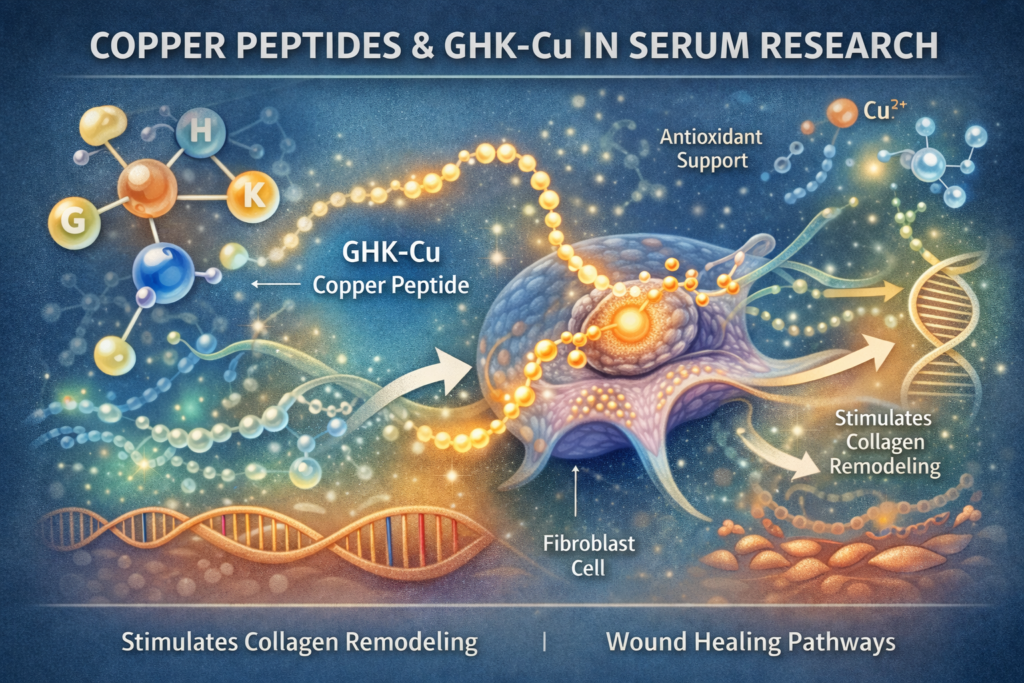
Among all peptides used in skincare science, copper peptides—especially GHK-Cu—are some of the most extensively studied. In both cosmetic chemistry and biomedical research, GHK-Cu is valued for its broad activity across wound healing, collagen remodelling, inflammation control, and skin regeneration pathways.
GHK-Cu is a naturally occurring tripeptide (glycine–histidine–lysine) that binds copper ions to form a biologically active complex. This copper–peptide structure allows it to act as a carrier peptide, delivering copper to cells where it supports enzymatic processes involved in tissue repair and antioxidant defence.
Decades of in-vitro, animal, and limited clinical research have linked GHK-Cu to several important skin-related mechanisms, including:
These properties explain why GHK-Cu is frequently described as a “gold standard” peptide in serum research. Peptide Serum
From a formulation and research perspective, GHK-Cu is especially useful because it:
Researchers often use GHK-Cu as a reference peptide when testing new serum concepts or evaluating the performance of novel peptide blends.
For laboratories and formulation scientists, GHK and GHK-Cu are sourced as raw peptide actives, not finished cosmetic products. These compounds are incorporated into experimental serum bases for:
UK-based researchers can obtain these peptide actives from suppliers such as LabGradePeptides.uk, which provides research-grade copper peptides strictly for R&D and laboratory use, maintaining a clear distinction between scientific research and consumer skincare applications.
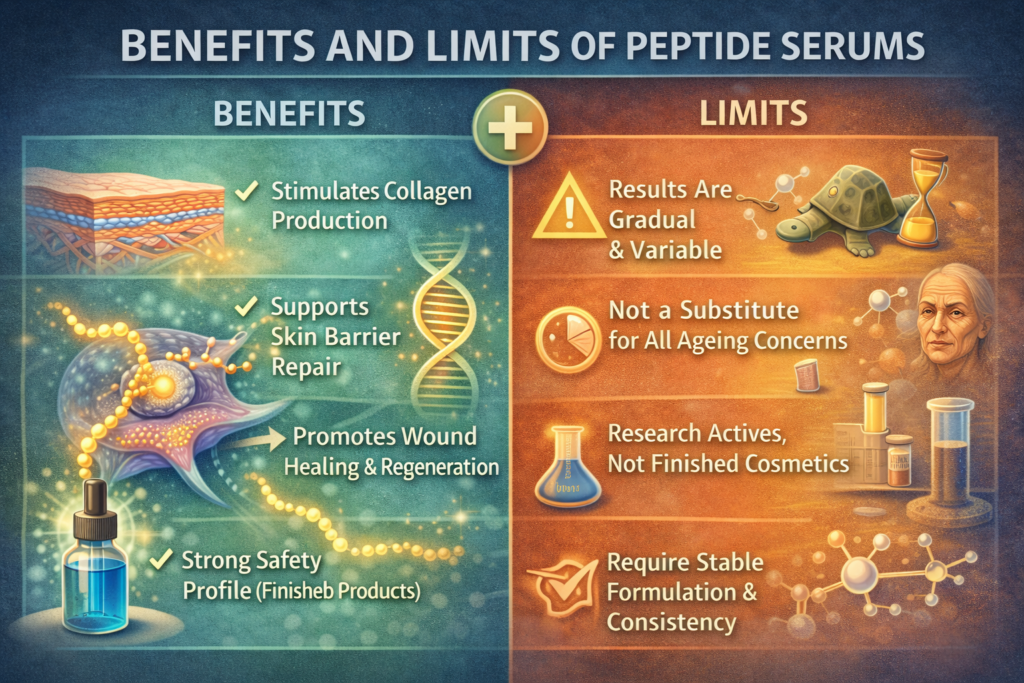
Peptide serums are widely discussed in skincare science because they offer a targeted, biologically informed approach to supporting skin structure and function. Research and dermatology commentary highlight several potential advantages—while also stressing the importance of realistic expectations and proper formulation.
When formulated and studied correctly, peptide serums are associated with several beneficial mechanisms:
Despite their promise, peptide serums are not a cure-all, and research consistently points to important limitations:
For a compliant and credible blog:
This balanced framing helps readers understand both the potential and the boundaries of peptide serums—keeping the discussion scientifically grounded and appropriate for research-focused audiences.
When discussing peptide serums, it’s essential to clearly separate cosmetic self-application from scientific research use. This distinction protects readers, researchers, and suppliers—and ensures the blog remains accurate and compliant within the UK context.
In laboratories and formulation science, peptide serums function as experimental systems, not consumer products. Researchers work with raw peptide actives to investigate:
These studies are conducted in-vitro, ex-vivo, or in controlled laboratory models, without human application.
In the UK, peptides may be supplied legally when they are clearly designated for Research & Development (R&D) use only. Compliance typically requires:
This framework allows legitimate research to proceed while preventing misuse or misrepresentation.
Because peptide serums are popular in consumer skincare, responsible communication should:
Maintaining this clarity helps readers understand that laboratory peptide work is about discovery and validation, not retail skincare advice.
Compliance is strengthened when peptides are sourced from suppliers that operate exclusively within the research domain. Platforms such as LabGradePeptides.uk support this by:
This approach enables formulators, academic labs, and researchers to explore peptide serum concepts responsibly—advancing skin science while staying aligned with UK regulatory and ethical expectations.
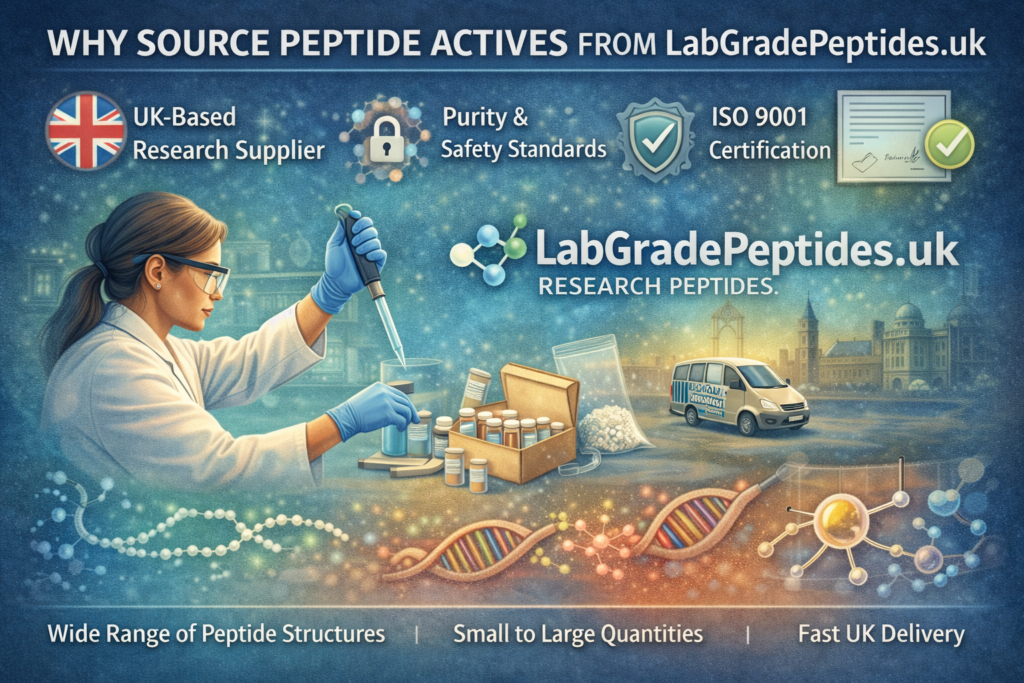
For laboratories, formulation chemists, and research professionals working on peptide serum concepts, sourcing high-purity peptide actives from a compliance-focused supplier is critical. The quality, documentation, and positioning of peptide materials directly affect both experimental reliability and regulatory alignment. Peptide Serum
A key reason researchers choose LabGradePeptides.uk is its strict Research & Development (R&D)–only focus. Peptides are supplied:
This clear positioning helps labs remain compliant with UK expectations and avoids any crossover into consumer skincare claims. Peptide Serum
Rather than selling finished serums, LabGradePeptides.uk provides access to the underlying peptide building blocks used in serum research, including:
This allows researchers to design and test custom experimental serum vehicles tailored to specific research questions. Peptide Serum
In peptide serum research, small variations can significantly affect outcomes. Research-grade sourcing supports:
These factors are especially important for studies on collagen signalling, wound healing, and barrier repair, where peptide concentration and stability matter. Peptide Serum
Being UK-based offers practical benefits for research teams:
This reliability is valuable for time-sensitive experiments or long-running formulation projects. Peptide Serum
By focusing exclusively on laboratory and formulation research, LabGradePeptides.uk supports the development and testing of peptide serum concepts without blurring the line between scientific investigation and retail skincare. This makes it a suitable sourcing partner for:
Peptide serums represent an important intersection between cosmetic science, dermatological research, and formulation chemistry. At their core, they are not defined by the finished cosmetic product, but by the bioactive peptide compounds that influence collagen signalling, barrier repair, wound healing, and skin remodelling at a cellular level.
Research shows that peptides—particularly signal peptides and carrier peptides like GHK-Cu—play meaningful roles in how skin cells communicate, regenerate, and maintain structural integrity. When incorporated into experimental serum vehicles, these peptides allow researchers to study ageing mechanisms, inflammation, and barrier disruption in a controlled, reproducible way. Peptide Serum
At the same time, it is critical to maintain a clear and responsible boundary between laboratory research and consumer skincare. Peptide actives discussed in research contexts are not finished cosmetics and are not intended for personal or clinical use. Their value lies in mechanistic insight, formulation testing, and scientific validation, not direct application.
For UK-based labs, formulators, and academic researchers, sourcing peptide actives from a compliance-focused supplier is essential. By providing research-grade peptides strictly for R&D use, LabGradePeptides.uk supports responsible exploration of peptide serum concepts—helping advance skin science while remaining aligned with regulatory, ethical, and scientific standards.
Used correctly, peptide serums will continue to serve as powerful research models, deepening our understanding of skin biology and guiding the development of safer, more effective skincare innovations in the future. Peptide Serum
A peptide serum is a lightweight formulation designed to deliver short chains of amino acids (peptides) that are studied for their role in supporting collagen, elastin, and skin barrier function in skincare and laboratory research.
Peptide serums work by sending signals to skin cells, especially fibroblasts, encouraging processes linked to collagen production, barrier repair, and skin remodelling in experimental and cosmetic research settings. Peptide Serum
Peptide serums are often considered more effective in research because small peptides can signal skin cells, whereas large collagen molecules mainly hydrate the surface without directly influencing cellular activity.
Common peptide types include signal peptides, carrier peptides (such as copper peptides), and barrier-support peptides, each studied for different skin-related mechanisms. Peptide Serum
GHK-Cu is a copper peptide widely studied for its role in wound healing, collagen remodelling, and regenerative skin processes, making it a benchmark ingredient in peptide serum research.
Research suggests peptide serums can support firmness, elasticity, and skin repair over time, but results are gradual and depend on formulation quality, consistency, and overall skincare context. Peptide Serum
In studies and cosmetic testing, peptide-related improvements are typically observed after 6–8 weeks or longer, as peptides influence gradual biological processes rather than instant changes.
Consumer peptide serums are generally well tolerated, but in a research context it’s important to note that raw peptide actives are not finished skincare products and should not be used outside laboratory settings. Peptide Serum
Yes. Formulators and laboratories often create experimental peptide serum prototypes using raw peptide actives to study collagen signalling, barrier repair, and skin regeneration in vitro or ex-vivo.
UK researchers can source research-grade peptide actives from LabGradePeptides.uk, which supplies peptides strictly for Research & Development use, not for cosmetic self-application. Peptide Serum